
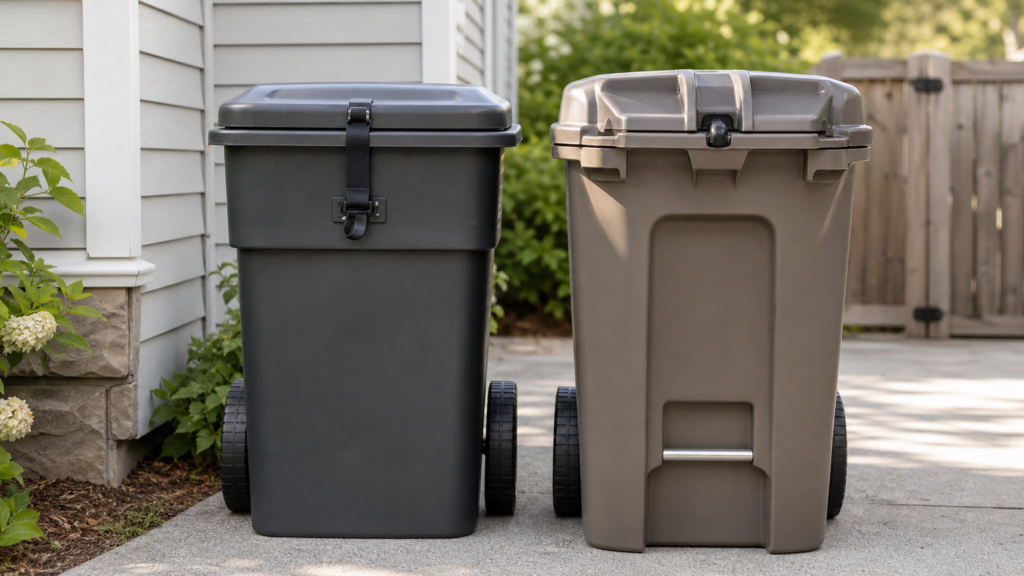
Quick Verdict: When a Lockable Lid Is Enough-and When You Need Animal-Proof
If your biggest nuisance is raccoons, squirrels, or curious dogs, a well-designed lockable lid can be enough-provided the latch is strong and easy for humans to operate but hard for animals to bypass. Manufacturers emphasize durable materials and secure locking mechanisms as must-have features, which tracks with field experience.
But if you live in or near bear country, you’re shopping in a different category: you need a bear-resistant (animal-proof) solution, not just “lockable.” The industry itself leans away from the term “bearproof” because a determined bear can eventually defeat most designs; the goal is bear-resistant-hard enough to deter raids and keep wildlife from learning your address.
Safety note: use household cleaners only as labeled, work with ventilation, keep children and pets away while cleaning, and never mix bleach with vinegar, ammonia or other cleaners. For pet ingestion, large-wildlife rules, illness, heavy infestations or anything beyond routine household cleanup, use a veterinarian, official local guidance or a qualified professional.
A lid alone often is not enough. A sturdy metal hook or rigid latch, paired with better placement and enough weight to reduce tipping, solves many repeat night-time raids.
Lockable ≠ Animal-Proof: Definitions, Materials, Real-World Outcomes
- Lockable trash can: any bin with a closing or latching feature (clips, straps, padlocks). Good against casual tampering and wind, and often fine for suburbs without bears-if the latch resists prying and the lid doesn’t flex.
- Animal-proof / bear-resistant: engineered for wildlife pressure with reinforced lids, tamper-proof openings, and heavy-duty materials (HDPE or powder-coated steel). These designs prioritize security and day-to-day usability.
Reality check: “Bear-resistant” doesn’t mean unbreakable; it means credible deterrence. Even brands that sell into bear territory caution that nothing is truly “bear-proof”-the standard today is resistance, not invincibility.
Placement matters as much as hardware: use a low-visibility spot, avoid leaving edible trash outside, and choose a closure that actually stays shut.
The Locking Mechanisms That Work (Hooks, Recessed Latches, Padlocks)
Not all locks are equal. What consistently works in the field:
- Recessed latches that animals can’t grip, yet users can open without tools. Several manufacturers highlight recessed, easy-for-humans/hard-for-wildlife latch designs for this reason.
- Rigid metal hooks or hasps that do not flex under prying. The latch should close firmly without leaving an easy grip point.
- Padlock-ready lids (useful in shared areas) and screw-top systems that create a tight seal to suppress odors and resist twisting attacks.
Weak points to avoid: elastic straps that stretch over time, lids with too much flex, and exposed latches that provide a bite point.
Build & Materials: Steel vs Heavy-Duty Poly, Lid Reinforcement, Weather Resistance
Two common construction paths:
- Powder-coated steel: high rigidity, vandal resistance, and longevity when coated correctly; excellent for parks and public spaces.
- Heavy-duty polyethylene (HDPE): resists dents, won’t rust, and can be formed into thick, chew-resistant shells; often paired with reinforced lids and gasketed seals.
Whichever you choose, look for: reinforced lid edges, tamper-proof openings, and weather-resistant coatings/seals so performance doesn’t degrade in sun, rain, or freeze-thaw cycles.
A quick feel test helps: if the lid flexes easily or the latch wiggles, animals may find that weakness.
Design Details That Matter: Openings, Tamper-Proof Features, Capacity & Maintenance
Small design choices add up:
- Inaccessible openings so paws can’t pry.
- Tamper-proof geometry around the latch area to prevent leverage.
- Right-sized capacity-too small and you’ll overfill (lid won’t seal), too big and it’s hard to move safely.
- Maintenance access (removable liners, front/side service) so you actually keep it clean-grime and odor invite visitors. Major guides put tamper-proof design, capacity, and maintenance on the short list of must-haves.
Avoid leaving bags outside the bin. One overnight bag can teach animals where to return.
Placement & Use: Weighting, Hiding the Bin, Habits That Prevent Night-Time Raids
Hardware is half the story; habits are the other half:
- Hide the bin from line-of-sight and paths animals travel.
- Add weight (sandbag in the base, a full liner, or place the bin against a wall) to reduce tipping.
- Time your put-out close to pickup; don’t feed the wildlife with overnight exposure.
- Keep the area clean; the fewer odors, the fewer visitors.
These simple steps can stop repeat messes without requiring a full enclosure.
Choose by Animal: Raccoons vs Bears vs Stray Dogs (Use-Case Scenarios)
- Raccoons & squirrels (suburbs): a lockable lid with a rigid, non-flexing latch often suffices; consider recessed latches and sturdy hooks.
- Bears (rural/edge-of-town): invest in bear-resistant cans or enclosures-look for reinforced lids, inaccessible openings, and strong latching; some brands also use screw-top lids to control odor and leverage.
- Stray dogs: prioritize tip resistance (weighting, placement) and simple latches; dogs are less dexterous but persistent.
For repeat small-animal or stray-dog messes, the practical pattern is usually the same: pair a stronger closure with a less exposed location and cleaner trash habits. Matching mechanism + placement + habits beats buying the toughest-looking can and leaving it in an easy target spot.
Buyer’s Checklist & Mistakes to Avoid
Checklist
- Rigid lid + latch that a human can open quickly but an animal can’t grip.
- Material suited to your setting (steel for abuse/vandal resistance; HDPE for rust-free, chew-resistant shells).
- Tamper-proof openings, reinforced lid edges, and weather-resistant finishes/seals.
- Capacity that matches your weekly volume so the lid actually closes.
Avoid
- Flexible lids that bow under load.
- Exposed latches animals can grab.
- Leaving smelly trash outside the bin “just for a minute.”
- Parking the can in a visible, easy-access spot.
Before buying a locking can, reduce the access triggers. The practical first pass is location, food residue, bag leaks and routine. Start with how to keep a dog out of the trash, then use this lockable-vs-animal-resistant guide when behavior and placement are not enough.
Main Takeaway
If you are dealing with small wildlife, a rigid lockable lid plus better placement is often enough. In bear areas, use properly rated bear-resistant options and follow local rules.
Quick Comparison Table
| Problem | Lockable can | Animal-proof can |
|---|---|---|
| Wind opening the lid | Usually enough | Also works |
| Dogs or small wildlife | Often enough with good placement | Better if raids continue |
| Large wildlife | Usually not enough | Use rated, reinforced designs where required |
| Convenience | Usually easier | Can be heavier and slower |
| Cost | Lower | Higher |
Placement Matters as Much as the Lid
A strong lid helps, but a poorly placed can still invites trouble. Keep outdoor trash away from fences, low walls, and objects an animal can use for leverage. If possible, store bags in a garage, shed, or locked enclosure until pickup day.
- Rinse food packaging before tossing it into outdoor bins.
- Do not leave bags beside the can overnight.
- Use bungee cords only as a backup, not the main defense.
- Check local rules before buying bear-resistant containers, because some areas require specific approved models.
When to Upgrade
Upgrade from a basic lockable can when the same mess happens more than once, when the lid shows bite or pry marks, or when local wildlife is strong enough to move the whole bin. Repeated raids usually mean the animal has learned the reward, so a small clip or loose strap will not be enough.
For serious wildlife pressure, look for reinforced lids, recessed closures, heavy-duty hinges, and local approval where required. For lighter problems, a clean bin, tighter bags, better placement, and a rigid latch may solve the issue without buying the most expensive container.
Best Choice by Household
For a suburban home with occasional tipped lids, start with a lockable lid and better bag habits. For rural properties, wooded lots, or repeated wildlife visits, move straight to a stronger animal-resistant design. For homes with pets, a lockable indoor kitchen can may be enough if the main issue is a dog nosing the lid open.
The right choice is the lowest-friction setup that actually stops the mess. If opening the lid becomes annoying, people may leave bags beside the can, which defeats the point. Balance security with a closure system that household members will use every time.
Also consider pickup day. Some haulers will not service a container if the locking mechanism is awkward, nonstandard, or still engaged at the curb. Before adding aftermarket locks, check whether the lid can be opened normally by collection crews.
Related Guides
- odor control that attracts fewer pests
- trash can hacks for lids and bags
- storm debris and outdoor trash handling
Practical Safety Note
In areas with large wildlife, do not rely on DIY locks alone. Check local waste rules and use containers approved for the area when required. A homemade latch may help with wind or small animals, but it is not the same as a tested bear-resistant container.
For normal suburban use, the biggest wins are less dramatic: keep food odor down, close the lid every time, stop overfilling bags, and place the bin where animals cannot use a wall or fence for leverage.
FAQ
Is a lockable trash can the same as an animal-proof trash can?
No. A lockable can may stop wind, pets, or light tampering, but animal-proof cans use stronger materials, reinforced lids, and designs that resist prying or chewing.
What kind of trash can stops raccoons?
A rigid lid with a recessed latch, good weight, and smart placement usually works better than elastic straps or loose clips.
Do bear-resistant trash cans need certification?
In many bear-prone areas, local rules may require approved bear-resistant containers. Check local guidance before buying.
Can bungee cords animal-proof a trash can?
They can help as a backup, but they are not a reliable animal-proof system. Animals can stretch, chew, or work around exposed cords.
How do you make outdoor trash less attractive?
Bag food waste tightly, rinse smelly packaging, keep lids closed, store bins away from fences, and move trash to the curb as close to pickup time as allowed.