
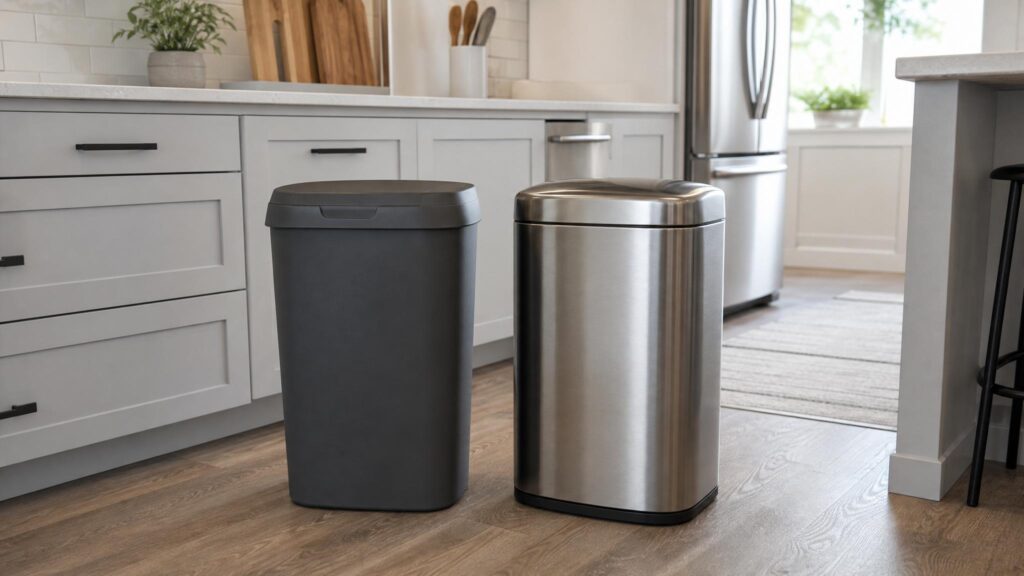
The plastic vs stainless steel trash can choice looks simple at first, but it affects cleaning, odor control, durability, weight, price, and how the can fits into the room. Stainless steel usually looks better in a kitchen. Plastic is usually cheaper, lighter, and easier to clean without worrying about fingerprints or streaks.
Fast answer: a stainless steel trash can is usually better for a visible kitchen spot because it looks cleaner, resists stains and helps contain odors when paired with a tight lid. A plastic trash can is usually better for bathrooms, laundry rooms, garages, kids’ rooms or any place where price, light weight and easy rinsing matter more.
If you are choosing between the two, decide by location first: use stainless steel where appearance and odor control matter, and plastic where dents, fingerprints, cost or rough use matter more. For tight kitchens, also check the small-kitchen size guide before choosing a material.
The best choice depends on where the trash can will sit and how it will be used. A kitchen bin in plain view has different needs from a garage can, bathroom can, office bin, or outdoor utility can.
| Priority | Better choice | Why |
|---|---|---|
| Lowest price | Plastic | Usually cheaper upfront |
| Modern kitchen look | Stainless steel | Cleaner visual finish |
| Easy moving | Plastic | Lighter weight |
| Fingerprint resistance | Plastic | Less visible smudging |
| Long-term shell durability | Stainless steel | Less likely to crack |
| Outdoor rough use | Heavy-duty plastic | Better impact handling and lower cost |
Plastic vs stainless steel trash can: plastic is usually better for low cost, light weight and rough utility use. Stainless steel is usually better for visible kitchens, design consistency and a more finished look. For odor, the lid, liner, inner bucket and cleaning routine usually matter more than the outer material.
Are stainless steel trash cans better? They are usually better for a visible kitchen if you want a cleaner look, a heavier shell and a more finished style. Plastic trash cans are usually better if price, light weight, rough utility use, easy rinsing and low-maintenance cleaning matter more.
Why are stainless steel trash cans more expensive? The outer shell, finish, pedal or sensor hardware, inner bucket design and fingerprint-resistant coatings all add cost. The extra price is easiest to justify when the can sits in plain view; for a hidden cabinet, garage or utility area, plastic often gives better value.
Quick Verdict
Choose a plastic trash can if you want the most practical option for price, weight, and easy cleaning. Choose a stainless steel trash can if the can will be visible in a kitchen, you care about appearance, and you are willing to wipe fingerprints, water spots, and smudges more often.
For most utility spaces, plastic is the smarter buy. For a main kitchen where the can is part of the room visually, stainless steel often makes more sense.
Plastic Trash Cans: Strengths and Weaknesses
Plastic trash cans are popular because they are affordable, light, and easy to move. They work well in bathrooms, bedrooms, laundry rooms, offices, garages, and utility spaces. A plastic can is also easier to rinse, scrub, and dry without worrying about streaks.
The downside is that cheap plastic can stain, hold odor, warp in heat, or crack if it is dropped or stressed. Plastic also looks less premium in a visible kitchen, especially if the room has stainless appliances or a more polished design.
Best uses for plastic
- Bathroom trash cans
- Bedroom and office bins
- Kids’ rooms
- Garage and utility areas
- Outdoor bins where appearance matters less
- Low-budget rental or temporary setups
Stainless Steel Trash Cans: Strengths and Weaknesses
Stainless steel trash cans are popular in kitchens because they look cleaner and more permanent. They pair well with stainless appliances, modern cabinets, and open kitchen layouts. A good stainless steel can may also feel sturdier than a basic plastic bin.
The tradeoff is maintenance. Stainless steel can show fingerprints, water spots, dust, and streaks. Some finishes are better than others, but even fingerprint-resistant models need wiping. Stainless steel cans also usually cost more and weigh more.
Best uses for stainless steel
- Main kitchen trash cans
- Open-plan kitchens where the bin is visible
- Modern or minimalist interiors
- Homes where appearance matters more than lowest price
- Step-on or motion sensor cans with a finished outer shell
Cleaning and Odor Control
Plastic is usually easier to clean aggressively. You can scrub it with soap and water, rinse it, and let it dry. That makes it practical for messy areas, food waste, pet waste, and utility use.
Stainless steel needs more careful wiping on the outside, especially if the finish shows streaks. The inner bucket may still be plastic, so odor control often depends less on the outer shell and more on the liner, lid, rim, and bottom of the can.
If odor is the main problem, the material is only one part of the answer. Bag fit, leaks, cleaning frequency, and moisture matter more. Use the guide on how to keep a trash can from smelling if the smell returns after changing the bag.
Odor Control by Material
Plastic can hold odor if food liquid sits on the surface too long, especially if the plastic is scratched or textured. Once odor gets into rough spots, the can may need a deeper scrub with soap, baking soda, and full drying.
Stainless steel outer shells are less likely to hold odor on the visible surface, but that does not mean the whole trash can is odor-proof. Many stainless cans include a plastic inner bucket, plastic lid parts, rubber seals, or a bag ring. Those parts still need cleaning.
If you choose stainless steel mainly for odor control, check whether the model has a removable inner bucket. That feature often matters more than the outer material because it makes washing and drying easier.
Durability: Cracking vs Denting
Plastic and stainless steel fail in different ways. Plastic is more likely to crack, warp, discolor, or absorb stains over time. This is especially true for cheaper plastic cans exposed to sunlight, heat, or rough handling.
Stainless steel is less likely to crack, but it can dent, scratch, or show surface damage. A thin stainless shell may look premium at first but still dent if kicked, dropped, or hit by a heavy object. The lid mechanism, pedal, hinge, and inner bucket often matter more than the outer material.
Weight and Daily Handling
Plastic cans are lighter, which makes them easier to move for cleaning. This matters if you take the can outside to rinse it, move it around the kitchen, or empty it often.
Stainless steel cans can feel more stable because they are heavier, but that extra weight can be annoying when cleaning behind or under the can. If the can has a removable inner bucket, this matters less because you can clean the bucket separately.
Price and Long-Term Value
Plastic usually wins on upfront cost. If you need several bins for different rooms, plastic makes sense. You can buy multiple cans without spending much, and replacing one is not a big deal.
Stainless steel usually costs more, but it can be worth it for a visible kitchen can that you expect to keep for years. The value depends on build quality. A cheap stainless can with a weak pedal or bad lid may be worse than a sturdy plastic can.
Lid Type Matters Too
The material is only one decision. The lid type can change the daily experience just as much. A plastic step-on can may be more practical than a stainless touch-top can if the touch lid gets dirty. A stainless motion sensor can may look better, but it adds batteries, sensors, and electronics to maintain.
Material is only one part of the buying decision. If daily use matters more than the outer finish, compare touchless vs step trash cans. If smell is the real issue, use best trash cans for kitchen odor control before choosing by stainless or plastic alone.
For kitchen use, compare the full system: material, lid, inner bucket, bag fit, and cleaning access. A good trash can should make it easy to remove the bag, wipe the rim, clean the bottom, and keep odor under control.
- Open-top cans: Easy to use, but poor odor control for food waste.
- Swing-top cans: Simple, but the lid can get dirty quickly.
- Step-on cans: Good hands-free option with no electronics.
- Motion sensor cans: Convenient, but more expensive and more delicate to clean.
Which One Should You Choose by Room?
| Room | Recommended material | Reason |
|---|---|---|
| Kitchen | Stainless steel or quality plastic | Depends on visibility and budget |
| Bathroom | Plastic | Small, cheap, easy to clean |
| Bedroom | Plastic | Light use and low odor |
| Office | Plastic or small metal | Mostly dry waste |
| Garage | Heavy-duty plastic | Impact and utility use |
| Outdoor area | Heavy-duty plastic | Weather, volume, and cost |
If you are choosing sizes at the same time, use trash can size by room before buying.
Common Buying Mistakes
- Buying stainless steel only for looks: Check the pedal, lid, liner, and cleaning needs too.
- Buying cheap plastic for heavy kitchen use: Thin plastic can hold odor and crack faster.
- Ignoring the inner bucket: Many stainless cans still use a plastic inner liner.
- Choosing the wrong size: A can that is too small causes overfilled bags and more leaks.
- Forgetting fingerprints: Stainless steel can look dirty even when the can is clean.
Best Choice by Household Type
Different homes need different trash cans. A single person in an apartment may care more about style and compact size. A family cooking daily may care more about capacity, bag fit, and how easy the can is to clean after leaks.
| Household | Better choice | Why |
|---|---|---|
| Small apartment | Stainless steel or compact plastic | Depends on visibility and space |
| Family kitchen | Quality stainless or heavy plastic | Needs capacity and easy cleaning |
| Pets in the home | Sturdy lidded can | Lid security matters more than material |
| Rental property | Plastic | Lower replacement cost |
| Design-focused kitchen | Stainless steel | Better visual match |
| Garage or utility room | Heavy-duty plastic | Best for rough use |
For most people, the best strategy is not choosing one material for the whole house. Use stainless steel where the trash can is visible and plastic where practicality matters more than appearance.
FAQ
Do stainless steel trash cans smell less than plastic?
Not automatically. Stainless steel may absorb less odor on the outer shell, but many stainless cans still have plastic liners. Odor usually comes from food residue, leaks, moisture, and the lid area, not just the material.
Are plastic trash cans easier to clean?
Usually yes. Plastic cans are lighter and easier to scrub, rinse, and dry. Stainless steel can require more careful wiping to avoid streaks, fingerprints, and water spots.
Is stainless steel worth it for a kitchen trash can?
It can be worth it if the can is visible and you care about appearance. If the can is hidden under a sink or inside a cabinet, a quality plastic bin may be the better value.
Which lasts longer, plastic or stainless steel?
A well-made stainless steel can often has a longer-lasting outer shell, but the lid mechanism and inner bucket still matter. Heavy-duty plastic can also last a long time, especially in utility spaces.
Is plastic or stainless steel better for outdoor trash?
Heavy-duty plastic is usually better for outdoor trash because it is cheaper, lighter, and less likely to show dents. Stainless steel can work outdoors only if the model is designed for that environment, but most household stainless kitchen cans are better kept indoors.
Plastic vs stainless steel trash can quick answer: choose plastic for lower cost, lighter handling, utility rooms, outdoor jobs and fewer visible fingerprints. Choose stainless steel when the can sits in a visible kitchen and appearance matters more than price or smudge resistance.
For odor control, do not decide by material alone. Lid seal, liner fit, inner bucket design and cleaning routine usually matter more than whether the shell is plastic or stainless steel. If odor is the real concern, compare kitchen trash cans for odor control. If durability is the concern, compare stainless vs plastic trash can durability.
Bottom Line
Plastic trash cans are usually better for price, weight, and easy cleaning. Stainless steel trash cans are usually better for visible kitchens and a more polished look. If you want the practical answer, choose plastic for utility spaces and stainless steel for a main kitchen where appearance matters. Then focus on the real odor-control basics: a good bag fit, regular cleaning, dry surfaces, and a lid that works for your routine.