
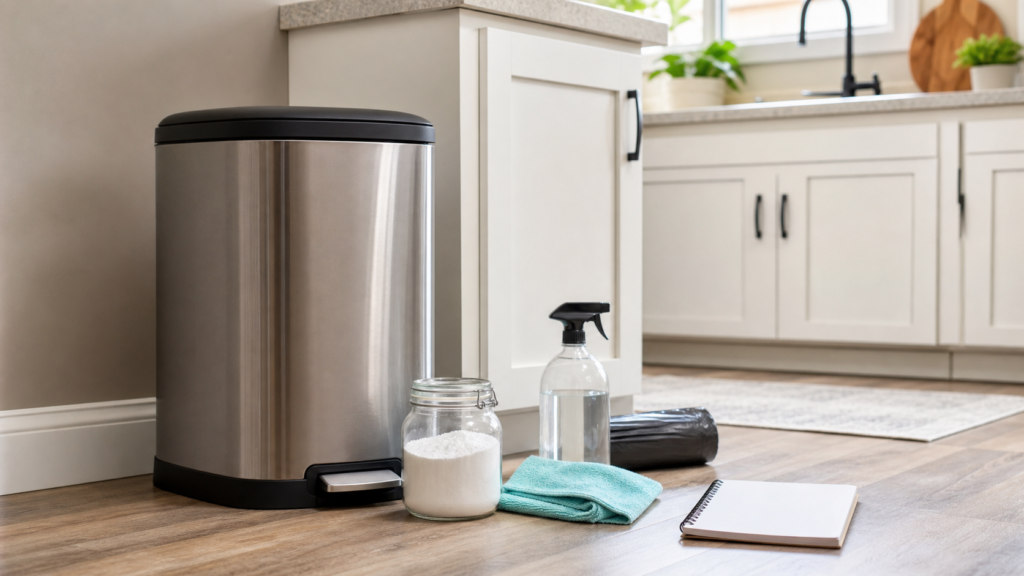
If your trash can smells, do not start by buying a new can, a scented bag or a stronger deodorizer. Start by finding the source. Most trash odor comes from one of a few repeat failures: wet food waste, a small bag leak, residue under the lid, trapped moisture after cleaning, plastic odor absorption or a nearby sink, cabinet or recycling smell being blamed on the trash can.
If the odor problem may come from poor liner fit, overfilling or using a can that is too large to empty often, compare the result with the Trash Can Size Selector before replacing the can.
If the smell starts under the liner, check bag fit before replacing the can. The Trash Bag Size Calculator helps identify bags that are too tight, too short or likely to slip; how to stop trash bag leaks covers wet residue and seam stress.
Use the checklist below to narrow the problem before you clean again or replace anything.
Decision checklist
Odor Diagnosis Checklist
Answer six quick questions to find the most likely odor source, the first fix to try today and when a better trash can may actually make sense.
- Fix source before buying
- No odor-proof claims
- No affiliate links in this tool
Inspect in this order
Useful next guides
How to use the result
The result is a starting diagnosis, not a product recommendation. If the checklist points to wet food waste, fix timing and waste handling first. If it points to a liner leak, check bag fit before blaming the can. If the empty can still smells, inspect the lid, rim, inner bucket and material before adding a deodorizer.
For a broader prevention routine, use how to keep a trash can from smelling. If the can needs a full reset, use how to clean a trash can. If leaks are part of the smell, check how to stop trash bag leaks.
When to consider a better trash can
A better trash can may help when the current one repeatedly traps residue, has poor liner fit, holds old odor in damaged plastic, lets pets get access or keeps food waste sitting too long for the household routine. It should not be the first move if the source is a dirty lid, damp cabinet, drain odor or wet scraps staying in the bag too long.
The useful order is simple: diagnose the source, fix the immediate cause, prevent the repeat failure, then decide whether the can itself is still the weak point.
Bag check: if the smell seems to come from the liner itself, compare when odor-control trash bags help kitchen smells before switching brands. The bag helps most after leaks, lid fit and old residue have been ruled out.