
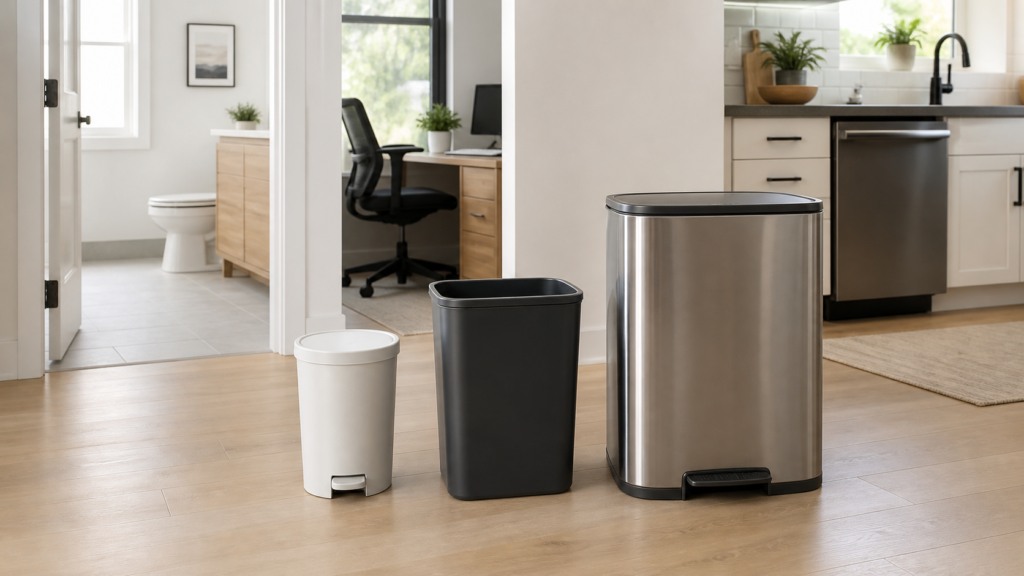
The right trash bag size is not only a gallon number. Two 13-gallon trash cans can have different heights, rim widths, inner buckets and lid clearances, so the same liner can fit one can well and stretch badly over another.
Garbage bag size calculator note: measure the can opening and height when possible. Gallons help estimate capacity, but rim size and bag overhang decide whether the liner grips, slips, tears or hangs too short inside the can.
If you only know the printed gallon size, cross-check with the trash bag size chart before choosing a liner.
Use this calculator as a starting point. Measure the can opening and height, choose the shape and compare the result with common liner sizes before buying. The goal is to prevent three common problems: a bag that slips into the can, a bag that hangs above the bottom or a bag that stretches so tightly over the rim that it tears.
If your main issue is leaks rather than sizing, start with how to stop trash bag leaks. If you are choosing the can itself, use the Trash Can Size Selector first.
If you want the plain lookup version before measuring, use what size trash bag for my trash can. It gives a fast gallon, liter and quart starting point, then this calculator handles rim and height fit.
Fast calculator answer: use the trash bag size calculator when the can is rectangular, slim, tapered, unlabeled or measured in liters instead of gallons. Gallons tell you capacity; the calculator checks opening width, depth, diameter, height and overhang so the liner is less likely to slip, stretch or hang above the bottom.
If you already know the can’s gallon size, compare the trash bag size chart. If you are fitting a standard kitchen can, check 13-gallon trash bag dimensions. If the bag falls in even when the size is close, use how to keep a trash bag from slipping.
Fit calculator
Trash Bag Size Calculator
Measure your trash can, choose the shape and get a practical bag width and height range before buying liners.
- No brand rankings
- No absolute leak claims
- Measure the can first
Check before buying
Useful next guides
Quick Rule For Trash Bag Size
For a rectangular or square trash can, a useful starting point is:
- Bag width: can length + can width.
- Bag height: can height + rim overhang + about one quarter of the bag width.
For a round trash can, a useful starting point is:
- Bag width: half the can circumference.
- Bag height: can height + rim overhang + half the can diameter.
These formulas are a starting point, not a product guarantee. Real liners vary by brand, drawstring style, thickness, stretch and whether the can has an inner bucket or unusual rim.
Common Trash Bag Size Starting Points
| Can Type | Common Capacity | Bag Size To Compare First | Fit Warning |
|---|---|---|---|
| Bathroom or bedroom bin | 2-4 gallons | Small liners around 17 x 18 inches or similar | Check rim shape; tiny bins often vary more than expected. |
| Office or dry-waste can | 4-8 gallons | Small to medium liners around 20-24 inches tall | Dry waste is forgiving, but a too-short liner still slips. |
| Standard kitchen can | 12-16 gallons | Tall kitchen bags are the first comparison point | Check actual can height and rim width, especially for slim cans. |
| Slim or under-sink kitchen can | 8-13 gallons | Use measurements instead of capacity alone | Slim cans may need a taller liner with more overhang. |
| Large indoor or garage can | 20-32 gallons | Large liners around 30-40 inches wide, depending on shape | Weight and sharp trash matter as much as size. |
| Outdoor or contractor-style can | 40+ gallons | Extra-large or contractor liners | Do not use kitchen bags for heavy debris or sharp loads. |
How To Measure Your Trash Can
Measure the opening at the top of the can, not the widest decorative point outside the can. For rectangular cans, measure length and width across the opening. For round cans, measure the diameter. Then measure the height from the bottom of the can to the rim.
If the can has an inner bucket, measure the bucket rather than the outer shell. If the can sits under a sink or inside a cabinet, also check whether the filled bag can lift out without scraping plumbing, hinges, drawer slides or the cabinet frame.
Why Gallons Alone Can Be Misleading
Capacity tells you how much the can can hold. It does not tell you the shape. A short, wide 13-gallon can and a tall, slim 13-gallon can may need different liner dimensions even though both are sold as 13-gallon trash cans.
This is why bag fit problems often show up as leaks, rim tears or slipping. A bag that is too tight can fail near the top. A bag that is too short may hang above the bottom, leaving the liner to hold the weight instead of the can. A bag with too little overhang can slide down when food waste or packaging pushes against the side.
When To Size Up
Choose the next larger practical liner size if the calculated size is close to the bag dimensions, if the can has a thick rim, if the bag needs to wrap around a liner ring or if the bag tends to slip when the can is half full.
Do not size up so much that the bag bunches heavily at the bottom or blocks the lid. Too much excess plastic can make bag changes messy, especially in narrow pull-out cans.
If you are measuring because the trash smells: fix bag fit first, then judge the odor-control feature. Scented liners can help with mild kitchen smells, but they cannot solve leaks, trapped food liquid, loose lids or a bag that falls into the can. Use when odor-control trash bags help kitchen smells for that next check.
When Thickness Matters More Than Size
If the liner fits well but still tears, the problem may be load type rather than dimensions. Wet food waste, sharp packaging, broken plastic, skewers, bones and heavy garage debris can overwhelm a normal kitchen liner even when the size is correct.
For normal kitchen trash, fix fit first. For sharp or heavy trash, choose a liner designed for that load and avoid treating any bag as fail-safe against liquid leaks.
Common Fit Mistakes To Avoid
Do not buy by gallon size alone. A bag can match the printed capacity and still be wrong if the can is unusually tall, slim, oval, tapered or fitted with an inner bucket. If the bag must be pulled tight to cover the rim, it is more likely to slip, tear or make drawstring removal harder.
Do not ignore the bottom of the can. A liner that hangs above the bottom may look acceptable when empty, but the weight of food waste, packaging and liquid residue pulls against the rim and seams instead of resting on the can floor. This is one reason bag leaks and rim tears often repeat even after changing brands.
Do not choose the largest bag automatically. Too much excess plastic can bunch under the bag, interfere with a pull-out frame or make a step lid close poorly. The best fit usually has enough room to reach the bottom, enough overhang to stay in place and not so much extra material that bag changes become messy.
Final Recommendation
Start with the calculator, then confirm the liner reaches the bottom and has loose rim overhang. If the bag fits but still leaks, diagnose the leak pattern before changing brands. If the bag never fits well, measure the can instead of relying on gallon size.
Use This As A Fit Starting Point
The calculator gives a practical liner-size estimate, not a brand guarantee. Trash can shape, rim thickness, drawstring stretch and bag material can change the fit.
Before buying a full box of bags, confirm the can opening, height, rim style and how much overhang you want.
FAQ
Is the calculator result exact?
No. Use it as a buying starting point, then confirm your can dimensions, rim shape and preferred overhang before buying bags.
Should I choose gallons or measurements first?
Measurements are safer. Gallon labels are inconsistent across brands, while opening width, length, height and rim shape tell you more about liner fit.
Why can two cans with the same gallon rating need different bags?
Can shape, rim thickness, bag material and drawstring stretch all affect fit. Two cans with the same gallon rating can need different liners.