
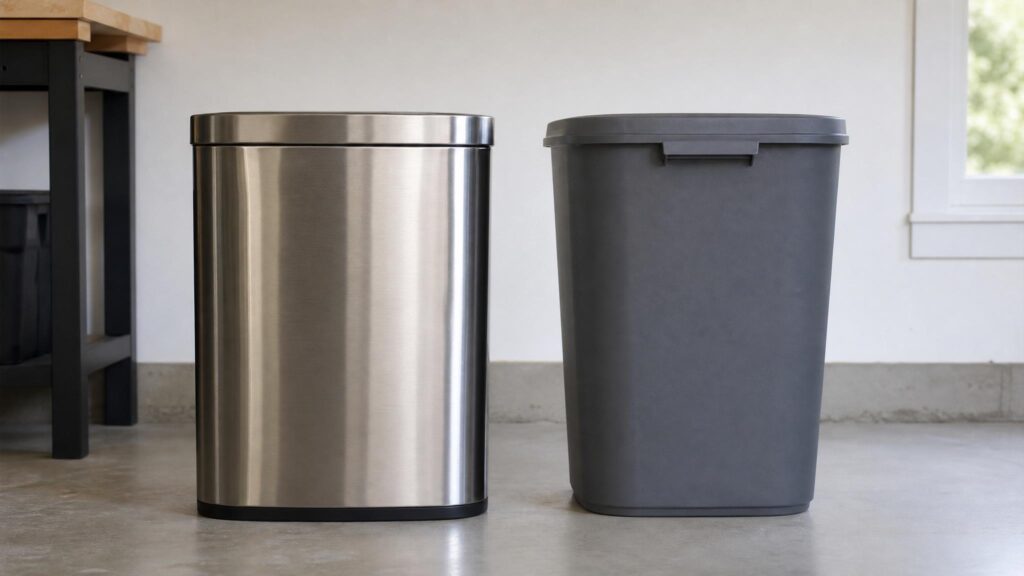
Stainless vs plastic trash can durability is not just about the outer material. The body matters, but the lid, hinge, pedal, inner bucket, rim, and bag fit often decide how long a trash can actually lasts.
In general, stainless steel is more durable for indoor kitchens where appearance and shape matter. Heavy-duty plastic is often better for garages, outdoor areas, rough handling, and lower-cost utility use.
| Durability factor | Stainless steel | Plastic |
|---|---|---|
| Cracking | Very resistant | Can crack at stress points |
| Denting | Can dent | Does not dent, but may flex |
| Sun exposure | Usually better, but can heat up | Can become brittle without UV resistance |
| Weight | Heavier | Lighter |
| Appearance over time | Can show fingerprints and scratches | Can scuff, stain, or discolor |
| Outdoor utility use | Only if designed for it | Heavy-duty plastic usually wins |
Quick Verdict
Choose stainless steel if you want a durable indoor kitchen trash can that keeps its shape and looks more polished. Choose heavy-duty plastic if you need a lighter, cheaper, impact-friendly can for utility spaces, garages, outdoor areas, or rough use.
For long-term durability, do not judge only by material. A sturdy plastic can with a good lid can outlast a cheap stainless can with a weak pedal.
Body Durability: Cracks vs Dents
Stainless steel resists cracking and usually holds its shape well. It can dent if hit hard, but it is less likely to split at corners or stress points.
Plastic is lighter and can absorb bumps without denting, but it can crack over time. Common failure points include the rim, corners, hinge area, pedal connection, and spots where screws or lid parts attach.
Plastic Types and Wall Thickness
Not all plastic trash cans are equal. A thin decorative plastic bathroom bin is very different from a heavy-duty utility can. Wall thickness, flexibility, and UV resistance all affect durability.
For indoor light use, standard plastic may be fine. For garages, outdoor areas, or heavy kitchen use, look for thick plastic, reinforced rims, and a lid that does not flex too much. If the plastic feels flimsy when empty, it will usually feel worse when the bag is full.
Plastic is often the better choice when the can will be moved often, bumped, dragged, or used in a space where dents and appearance do not matter as much.
Stainless Steel Finish and Thickness
Stainless steel durability also varies. A thin stainless shell can dent or feel wobbly. A better-built stainless can has a stronger shell, stable base, solid lid, and a finish that hides fingerprints and light scratches.
Brushed or fingerprint-resistant stainless is usually easier to live with than a mirror-like finish. Even when the metal is durable, the surface can look worn if it constantly shows smudges, streaks, and water spots.
For a visible kitchen trash can, cosmetic durability matters because the can is part of the room. A can that still works but always looks dirty may feel like a bad purchase.
Lids, Hinges, and Pedals Matter More Than People Think
Many trash cans fail because the lid or pedal mechanism wears out, not because the body fully breaks. A lid that no longer closes properly can make a can feel old even if the shell still looks fine.
- Look for strong hinges and a lid that sits flush.
- Avoid thin plastic pedals on high-use kitchen cans.
- Check whether the inner bucket is removable and sturdy.
- Choose soft-close parts only if they feel solid, not flimsy.
- Make sure the rim does not flex too much when removing a full bag.
Sun, Heat, and Outdoor Use
Sun exposure is one of the biggest threats to plastic. Some plastics become brittle after long UV exposure, especially if they are not designed for outdoor use. Outdoor plastic bins should be heavy-duty and UV-resistant when possible.
Stainless steel handles sun differently. It will not become brittle like plastic, but it can get hot and may show water spots, corrosion, or surface wear if used in the wrong environment. Not every stainless kitchen can is meant to live outside.
For outdoor bins, heavy-duty plastic usually makes more sense unless the stainless model is specifically built for outdoor conditions.
Moisture, Odor, and Cleaning Wear
Plastic can hold odor if food liquid sits on it for too long, especially in scratched or textured areas. Cleaning with baking soda paste, dish soap, and full drying helps protect it.
Stainless steel is easier to wipe on the outside, but it can show streaks and fingerprints. Many stainless cans still have plastic inner buckets, so odor control may depend more on the liner than the visible shell.
For odor prevention, use how to keep a trash can from smelling.
Cost Over Time
Plastic costs less upfront. That makes it practical when you need several cans or when appearance is not important. If a plastic utility can cracks after years of rough use, replacement is usually affordable.
Stainless steel costs more, but it can be worth it for a visible kitchen can that you expect to keep long term. The value depends on build quality. A better hinge, pedal, and inner bucket matter as much as the stainless shell.
Durability by Cleaning Style
How you clean the can affects how long it looks and works well. Plastic can tolerate basic soap-and-water cleaning, but abrasive pads can scratch the surface and make odor easier to trap. Stainless steel can handle regular wiping, but harsh cleaners or steel wool can damage the finish.
| Cleaning habit | Effect on durability |
|---|---|
| Drying after washing | Helps both materials last and smell better |
| Using abrasive pads | Can scratch plastic and stainless finishes |
| Leaving leaks in the bottom | Increases odor and surface wear |
| Using right-size bags | Reduces stress on rim, hinge, and liner |
| Cleaning lid mechanisms gently | Protects pedals, hinges, and sensors |
For routine cleaning steps, use how to clean a trash can.
Best Material by Use Case
| Use case | Better material | Reason |
|---|---|---|
| Main kitchen | Stainless steel | Better appearance and shape retention |
| Under-sink bin | Plastic | Hidden, light, easy to clean |
| Bathroom | Plastic or small metal | Low volume and low cost |
| Garage | Heavy-duty plastic | Impact and utility use |
| Outdoor bin | UV-resistant plastic | Better value and weather utility |
| Design-focused kitchen | Stainless steel | Cleaner visual finish |
If you are still choosing between materials generally, read plastic vs stainless steel trash can.
How to Make Either Material Last Longer
- Use bags that fit so you are not yanking full liners against the rim.
- Do not overfill the can.
- Clean leaks quickly before residue hardens.
- Dry the can fully after washing.
- Keep plastic out of direct sun when possible.
- Wipe stainless steel with a soft cloth and avoid abrasive pads.
- Check pedals, hinges, and lid alignment before small issues become failures.
Warning Signs a Trash Can Is Wearing Out
- The lid no longer sits flat or closes fully.
- The pedal feels loose, sticky, or uneven.
- The rim flexes when you remove a full bag.
- Plastic has hairline cracks near corners or hinges.
- Stainless steel has dents that affect lid alignment.
- Odor remains after proper cleaning and drying.
- The inner bucket is warped, cracked, or hard to remove.
Small issues can often be managed early. But if the lid no longer seals, odor control becomes harder no matter what material the can is made from.
Durability vs Appearance
A garage can can look scratched and still be perfectly useful. A kitchen can in an open room has to work and look acceptable. This is why stainless steel is often preferred for kitchens even when heavy-duty plastic might survive rough handling better.
Think about where the can lives. If guests see it every day, stainless steel may be worth the extra care. If the can lives in a garage, laundry room, or outdoor corner, plastic durability and lower replacement cost may matter more.
Common Buying Mistakes
- Assuming stainless always lasts longer: cheap mechanisms can fail early.
- Using indoor plastic outdoors: sunlight can shorten its life.
- Ignoring the lid: a bad lid ruins odor control.
- Buying too small: overfilled bags stress the rim and hinge.
- Cleaning too aggressively: abrasive tools can damage both materials.
FAQ
Which lasts longer, stainless steel or plastic trash cans?
For indoor kitchens, stainless steel often lasts longer visually and structurally. For garages and outdoor utility use, heavy-duty plastic can be the better durability choice.
Do plastic trash cans crack?
They can crack at stress points, especially if they are thin, overloaded, exposed to sun, or used roughly. Heavy-duty plastic lasts longer than cheap lightweight plastic.
Do stainless steel trash cans dent easily?
Thin stainless steel can dent. Better-built cans with thicker shells resist dents better, but no household trash can is completely dent-proof.
What part of a trash can usually fails first?
The lid, hinge, pedal, soft-close part, or inner bucket often fails before the main body. Check those parts before buying.
Is stainless steel better for outdoor trash cans?
Not usually for normal household use. Heavy-duty plastic is often better outdoors because it is cheaper, lighter, and built for rough utility use. Stainless steel should only be used outdoors if the can is designed for that environment.
Can cleaning products damage trash can materials?
Yes. Abrasive pads can scratch both plastic and stainless steel. Harsh cleaners can damage finishes or make plastic surfaces age faster. Mild soap, water, and full drying are safest for routine cleaning.
Bottom Line
Stainless steel is usually the better durability choice for visible indoor kitchen cans, while heavy-duty plastic is usually better for utility, garage, and outdoor use. The most durable trash can is not just the strongest material. It is the can with the right size, sturdy lid, reliable hinge, good bag fit, and cleaning routine that prevents leaks and odor from wearing it down.