
Summer trash can smells get worse because heat speeds up decomposition, moisture builds faster, and food waste breaks down more aggressively. A bag that smells mild in winter can become unbearable in July if it contains meat scraps, fruit peels, coffee grounds, spoiled leftovers, or leaked liquid.
Summer heat makes weak lids and dirty liners more obvious. If odor spikes every time the kitchen warms up, compare trash cans built for better kitchen odor control.
If summer odor keeps returning, use the Trash Can Odor Diagnosis Checklist to find whether the main issue is heat, wet scraps, leaks, lid residue or cleaning moisture.
The fix is not just a stronger scented bag. Summer odor control is about reducing wet waste, cleaning residue, drying the can completely, and changing the schedule when the weather gets hot.
| Summer odor source | Best fix |
|---|---|
| Food scraps sitting too long | Empty trash sooner or freeze scraps until pickup day |
| Leaked liquid | Clean and dry the can, then use better-fitting bags |
| Outdoor bin heat | Keep bin shaded and rinse after pickup |
| Fruit flies | Remove sticky residue and tie food waste tightly |
| Lid odor | Scrub underside of lid, rim, and hinge area |
Why Trash Smells Worse in Summer
Warm weather creates better conditions for odor. Food waste breaks down faster, bacteria multiply more quickly, and moisture turns into a stronger smell inside a closed bin. Humidity also keeps the can damp for longer after leaks or cleaning.
The biggest summer odor triggers are wet food scraps, meat packaging, seafood shells, spoiled fruit, coffee grounds, sugary drink residue, and liquid leaking into the bottom of the can. Once that residue dries into a sticky layer, it can smell again every time the can warms up.
The 10-Minute Summer Reset
If the trash can already smells, reset it before adding a new bag. This quick routine works for most indoor kitchen cans.
- Remove the bag and any loose debris.
- Check the bottom for liquid or sticky residue.
- Wash the inside with warm water and dish soap.
- Scrub the rim, lid underside, handle, and pedal area.
- Rinse or wipe away soap residue.
- Dry the can completely with a towel.
- Leave the lid open until no moisture remains.
- Add a clean liner and an odor absorber if needed.
Drying is not optional in summer. A damp can can start smelling again even after it has been washed.
How to Stop Wet Food Waste From Smelling
Wet food waste is the main reason kitchen trash smells bad in hot weather. If possible, keep the wettest scraps out of the main trash can until trash day.
- Wrap meat scraps, fish packaging, and spoiled leftovers before throwing them away.
- Drain liquids from containers before putting them in the trash.
- Use a small tied bag for very smelly scraps.
- Freeze seafood shells, meat trimmings, and wet leftovers until pickup day if needed.
- Use compost for fruit and vegetable scraps if your setup supports it.
The freezer trick is especially useful when pickup day is still several days away. It keeps the worst odor sources out of the warm trash can until they can leave the house.
Outdoor Trash Bin Summer Routine
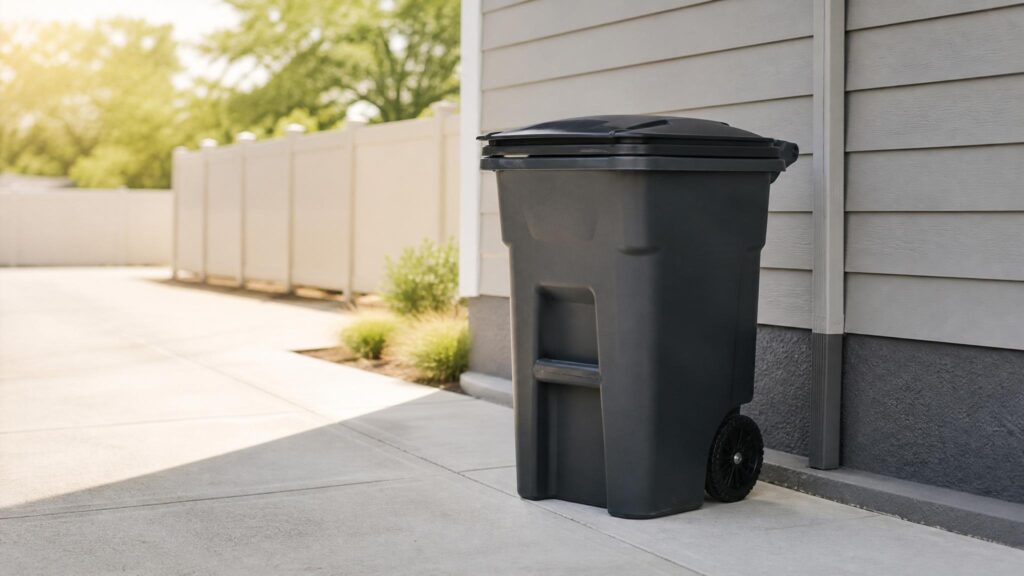
Outdoor bins can smell worse than kitchen cans because they sit in direct heat and hold larger bags for longer. The best time to clean an outdoor bin is right after pickup, when it is empty.
- Rinse the bin with a hose.
- Add dish soap and scrub the bottom, corners, lid, and rim.
- Rinse thoroughly.
- Tip the bin so water drains out.
- Leave the lid open in sun or moving air until dry.
- Sprinkle a small amount of baking soda only after the bin is dry.
If the outdoor bin sits in intense afternoon sun, move it to shade if possible. Lower heat means slower odor buildup.
How to Prevent Fruit Flies and Maggots
Summer trash odor can attract flies. Flies are drawn to fermentation, food residue, and moisture. Once they find a dirty bin, the problem can grow quickly.
- Keep food waste tied tightly inside bags.
- Do not leave sticky cans, bottles, or containers near the trash.
- Wipe fruit juice, soda, and sauce residue from the bin area.
- Empty indoor trash more often during heat waves.
- Clean the outdoor bin after leaks or torn bags.
If pests are already present, remove the trash, clean the residue, and dry the bin. Odor absorbers help only after the food source is gone.
What to Put at the Bottom of the Can
An absorbent layer can help with small drips, but it should not become a soggy mess. Use it as backup, not as permission to ignore leaks.
| Bottom layer | Best use | Replace when |
|---|---|---|
| Paper towel | Small kitchen drips | Every bag change |
| Newspaper | Larger plastic bins | When damp |
| Baking soda pouch | Mild odor control | Every 1-2 weeks in summer |
| Activated charcoal pouch | Stronger odor control | According to product or monthly |
For a homemade option, use the guide on DIY trash can deodorizer.
Bag Fit Matters More in Summer
Heat makes leaks more punishing. A thin, loose, or undersized bag can slip, stretch, or tear under wet food waste. Once liquid reaches the bottom of the can, odor becomes harder to control.
Use bags that fit the can properly. The liner should fold securely over the rim without being stretched to its limit. If you often throw away heavy wet waste, use a stronger bag or take the trash out sooner.
For slipping and tearing problems, see trash can hacks.
How Often to Empty Trash in Summer
There is no perfect schedule for every home, but summer usually requires more frequent emptying. A kitchen trash can with food waste may need to go out every day or every other day in hot weather.
- Low food waste: every 2 to 3 days may be fine.
- Normal cooking household: every 1 to 2 days in hot weather.
- Seafood, meat, diapers, or pet waste: same day if possible.
- Outdoor bin: rinse after leaks and after pickup when odor is noticeable.
Indoor vs Outdoor Summer Odor
Indoor and outdoor cans smell for different reasons. Kitchen cans usually smell because wet food scraps, packaging, and small leaks sit in a closed space near room temperature. Outdoor bins usually smell because a larger amount of waste sits in stronger heat for longer.
| Location | Main summer risk | Best prevention |
|---|---|---|
| Kitchen | Food scraps and liner leaks | Empty sooner and clean the lid/rim weekly |
| Under-sink can | Trapped humidity | Dry the can fully and avoid loose wet scraps |
| Garage bin | Heat plus poor airflow | Use tied bags and keep bin away from direct sun |
| Curbside cart | Large bags sitting in outdoor heat | Rinse after pickup and keep lid closed during use |
If the kitchen can smells but the outdoor cart does not, focus on food waste handling and lid cleaning. If the outdoor cart is the main problem, focus on rinsing, shade, and making sure bags are tied before they go outside.
What Not to Do
Some common odor fixes make summer trash smell worse or create a safety problem.
- Do not mix bleach and vinegar: use cleaning products separately and follow labels.
- Do not spray fragrance into a dirty can: it can mix with garbage odor.
- Do not leave wet paper at the bottom for days: replace absorbent layers when damp.
- Do not overfill bags: heavy warm trash is more likely to leak.
- Do not ignore the lid: summer odor often sticks near the top of the can.
Summer Odor Checklist
Use this checklist during hot weeks:
- Food scraps are wrapped, composted, frozen, or removed quickly.
- The bag fits the can and is not stretched tight.
- The bottom of the can is dry before the new liner goes in.
- The lid, rim, hinge, and pedal area are wiped weekly.
- Outdoor bins are rinsed after leaks or pickup.
- Odor absorbers are replaced more often than in cooler months.
FAQ
Why does my trash can smell worse in summer?
Heat speeds up food breakdown and bacteria growth. Moisture also stays active longer, so leaks and food residue smell stronger than they do in cooler weather.
What is the fastest way to stop summer trash odor?
Remove the bag, wash the can, scrub the lid and rim, dry everything fully, then add a clean liner. If food waste is the source, take it out sooner or freeze wet scraps until pickup day.
Should I leave my outdoor trash bin open to air out?
After cleaning, yes, leave it open until dry. During normal use, keep the lid closed to reduce pests. If possible, store the bin in shade.
Does baking soda help with summer trash smells?
Baking soda can help with mild odor and moisture, but it works best after the can is clean and dry. It will not fix rotten food, leaks, or sticky residue by itself.
How do you stop outdoor garbage from smelling in hot weather?
Tie kitchen bags tightly before putting them outside, rinse the bin after pickup, keep it shaded if possible, and clean leaked residue before it dries into the bottom or lid.
Should food scraps go in the freezer before trash day?
For very smelly scraps like seafood, meat trimmings, or wet leftovers, freezing until trash day can help. It is optional, but useful when pickup is several days away in hot weather.
Bottom Line
To stop summer trash can smells, control the wet waste first. Empty food scraps sooner, prevent leaks, clean residue from the lid and bottom, dry the can fully, and use odor absorbers only as support. In summer, a clean, dry trash can and a shorter emptying schedule beat any strong fragrance.