
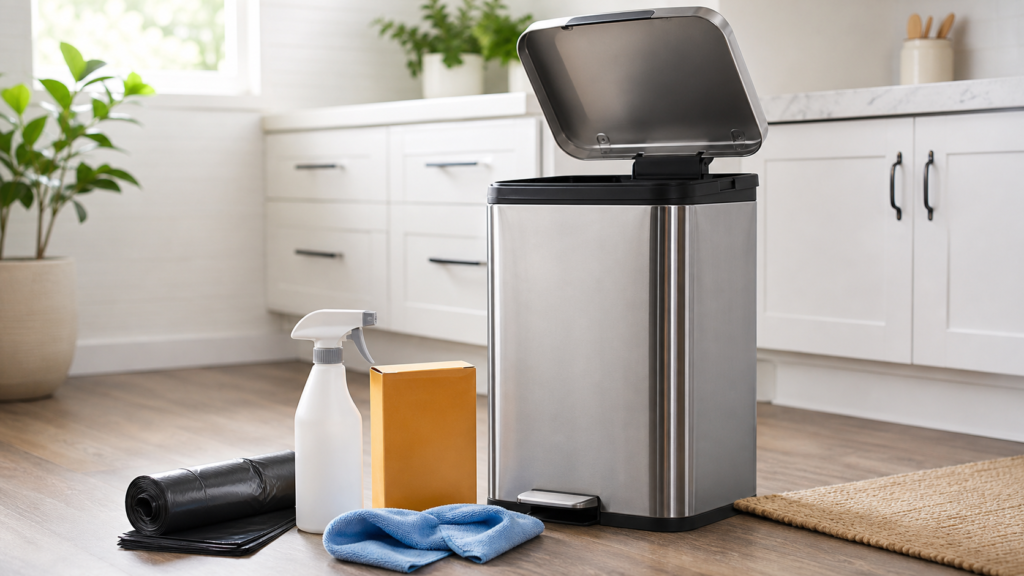
If your trash can still smells after cleaning, the problem is usually not that you “didn’t clean hard enough.” More often, the odor is coming from a place that was missed, moisture that got trapped after washing, old smell absorbed into plastic, a hidden liner leak, or a nearby kitchen source that is being blamed on the can.
The useful move is to stop repeating the same full wash and run a short diagnosis. A clean-looking trash can can still hold odor under the lid, around the rim, inside the hinge, below an inner bucket, in a bottom seam or on the cabinet floor around a pull-out can.
Quick Verdict
A trash can can still smell after cleaning when residue remains in contact zones, when the can is closed before it is fully dry, when plastic has absorbed old food odor, when a bag leak left liquid under the liner, or when the odor is actually coming from the sink, recycling, cabinet floor or another nearby source.
Do not jump straight to a stronger cleaner, scented product or new trash can. First confirm whether the smell is coming from the empty can, the lid area, trapped moisture, the next bag of waste or the space around the can. That diagnosis decides whether the fix is better cleaning, longer drying, different bag handling or replacement only as a last step.
If the issue is a broader odor routine, start with how to keep a trash can from smelling. If the can smells even when a liner is installed, the companion diagnosis is why your trash can smells even with a bag.
The Five-Minute Recheck
Before cleaning the whole can again, do this quick recheck while the can is empty. You are looking for the first source of the odor, not just the place where the smell is strongest.
- Smell the empty can with the lid closed, then open it and compare the difference.
- Remove the inner bucket, if the can has one, and check the bucket bottom, handle, corners and outer shell.
- Inspect the lid underside, hinge, rim lip, pedal area, liner ring and any filter holder.
- Look for sticky or dull spots where the bag folds over the rim.
- Check whether the bottom, seams and lid were fully dry before a new bag went back in.
- Move the can away from the sink, cabinet, recycling or pet-food area for a few minutes and see whether the smell follows the can.
If the empty can smells, focus on residue, absorbed odor or trapped moisture. If the smell appears only with the next bag, focus on wet food waste, liner fit or leak control. If the odor stays near the cabinet or sink after the can is moved, avoid treating the trash can as the confirmed source until the surrounding area has been checked.
Troubleshooting Table
| Symptom After Cleaning | Most Likely Cause | First Fix | When To Escalate |
|---|---|---|---|
| Smell returns when the lid opens | Lid underside, hinge or rim residue | Clean those contact zones separately and let them dry. | If the lid design traps grime repeatedly and cannot be cleaned well. |
| Can smells even with no bag inside | Absorbed odor, missed bottom residue or trapped moisture | Rewash mildly, rinse, air-dry fully and inspect seams. | If plastic odor remains after repeated proper cleaning and drying. |
| Sour smell at the bottom | Old liner leak or liquid under the bucket | Clean the bottom seam and fix bag fit or wet-waste handling. | If leaks keep recurring during normal kitchen use. |
| Musty smell after washing | The can was closed while damp | Dry with the lid open before relining. | If cabinet placement keeps the can constantly humid. |
| Odor seems stronger near the sink or cabinet | Non-trash odor source nearby | Check the drain, disposal, recycling, damp cloths and cabinet floor. | Do not buy trash products until the source is confirmed. |
| Freshener makes the odor worse | Fragrance masking active residue | Remove the freshener and fix residue or moisture first. | Use deodorizer only after the can is clean and dry. |
Missed Zones Generic Cleaning Guides Skip
A basic wash can clean the visible bucket and still leave odor in the parts that handle contact, movement and airflow. Start with the lid underside, hinge barrels, pedal linkage, rim lip, liner retainer ring, inner-bucket handle, filter compartment and bottom seam.
Residue is not always obvious. Thin liquid from meat packaging, takeout containers, fruit scraps or coffee grounds can dry into a dull film, especially on plastic. It may not look dirty, but warm air can carry the odor every time the lid opens.
If the can has a removable bucket, clean it separately from the outer shell. The gap between the bucket and the shell can hide leaked liquid, crumbs or damp spots. If the can sits in a cabinet pull-out, check the frame, slide hardware and cabinet floor too. The bin may be clean while the surrounding system is still holding the smell.
For a full baseline wash, use how to clean a trash can. For layout-related odor traps in a tight kitchen, compare under-sink trash cans versus slim step cans before assuming the can itself is the only problem.
Drying Is Part Of Cleaning
Odor often comes back because the can was relined too soon. A damp bottom, wet rim, moist hinge or closed inner bucket can make a freshly cleaned can smell musty even when the visible grime is gone.
After washing, leave the lid open and let the bottom, rim, lid underside and any removable bucket dry in a ventilated place. A quick towel wipe helps, but it may not reach seams, screw holes, pedal parts or the underside of a liner ring. If the can goes back under a sink or inside a cabinet while still damp, the enclosed space can slow drying and make the odor seem like a cleaning failure.
Avoid exact drying-time rules. A sunny patio, a humid apartment kitchen and a closed cabinet all behave differently. The practical standard is simple: no damp bottom, no wet hinge, no moisture under the bucket and no closed lid until the can is dry.
Plastic Odor Absorption Vs Active Dirt
There is a difference between active dirt and old odor held by the material. Active dirt means food residue, liquid, wet paper, old liner leaks or grime still exists somewhere. Material odor means the can is empty, clean and dry, but plastic still smells after repeated exposure to food waste.
Plastic is more likely to hold odor when it is scratched, closed while damp or repeatedly exposed to leaks. Stainless steel exteriors can be easier to wipe, but many stainless cans still use plastic inner buckets, lids, liner rings or seals. Those plastic parts still need inspection.
If the smell fades after drying but returns with the next wet bag, the main issue is probably bag leaks or food-waste routine, not the cleaner. If the empty, dry can still smells after careful cleaning, then material, removable-bucket design and replacement become more relevant. That is when a buying guide such as best trash cans for kitchen odor control can help, after diagnosis rather than before it.
When To Use A Deodorizer
A deodorizer can help with mild lingering smell after the can is clean and dry. It should not be used to hide active leaks, food residue, damp plastic or a dirty lid. If the odor source is still present, a scented product can make the can smell like trash plus fragrance.
Baking soda, charcoal and purpose-built odor absorbers can be reasonable low-risk options for background odor, but they should be treated as odor management, not sanitation. They do not replace cleaning, drying or fixing the reason wet waste is reaching the can.
For a simple add-on after cleanup, use DIY trash can deodorizer. Add it only after the can has been inspected and dried.
Check The Bag And Waste Routine
A can can smell clean for a few hours and then smell again as soon as the next bag starts repeating the same problem. Look at how the bag sits in the can. If it slips below the rim, stretches too tightly, hangs above the bottom or leaves gaps around an inner bucket, wet waste can reach the can again.
Wet food packaging, meat trays, seafood packaging, coffee grounds, spoiled produce and saucy takeout containers can restart odor quickly. Drain liquid before tossing containers, seal very wet scraps when practical and take food-heavy bags out sooner. A smaller bag emptied sooner may beat a larger can that holds food waste for too long.
If odor appears after the next full bag, diagnose liner fit and leaks before blaming the cleaning method. Start with how to stop trash bag leaks if the bottom of the can smells sour or wet after the bag comes out.
When Replacement Makes Sense
Replacement is reasonable when the can is cracked, warped, deeply scratched, impossible to clean fully, or designed in a way that repeatedly traps residue around the lid, hinge or pedal area. It can also make sense when standard bags do not fit the shape well and liner leaks keep happening during normal use.
Do not treat replacement as proof that stainless steel, a filter, a tight lid or a premium can will permanently remove odor. A new can can smell too if wet food, leaks, damp relining and dirty lid areas keep repeating. The better replacement question is: would a different size, removable bucket, easier-cleaning lid or better bag fit remove the failure point you already identified?
If the answer is yes, a buying guide can help narrow the options. If the answer is not clear yet, keep troubleshooting. Buying before diagnosis is how people replace the can and keep the smell.
Final Recommendation
If your trash can still smells after cleaning, run the diagnosis in this order: inspect missed lid and rim zones, confirm the can is fully dry, separate plastic odor from active residue, check for old liner leaks, move the can away from nearby odor sources and watch what happens with the next bag.
The right fix depends on the source. Clean hidden contact zones if the lid smells. Dry longer if the odor is musty. Fix bag fit if the bottom smells sour. Check the sink or cabinet if the odor does not follow the can. Consider replacement only when the existing can keeps trapping odor after proper cleaning and drying.