
A good DIY trash can deodorizer should do one simple job: absorb odor before it spreads through the kitchen. It should not just cover garbage smell with a stronger fragrance. If a trash can smells like lemon mixed with old food, the problem is not solved.
Safety note: use household cleaners only as labeled, work with ventilation, keep children and pets away while cleaning, and never mix bleach with vinegar, ammonia or other cleaners. For pet ingestion, large-wildlife rules, illness, heavy infestations or anything beyond routine household cleanup, use a veterinarian, official local guidance or a qualified professional.
A DIY deodorizer can help with mild smells, but it will not fix a poorly sealed or hard-to-clean bin. For stronger kitchen odor problems, see our guide to the best trash cans for kitchen odor control.
Before relying on any deodorizer, use the Trash Can Odor Diagnosis Checklist to make sure you are not masking a leak, residue or moisture problem.
The easiest homemade option is a small baking soda pouch placed under the liner or near the lid. Baking soda is cheap, easy to replace, and useful for controlling mild trash can odors between deeper cleanings. You can keep it unscented, or add a small amount of essential oil if you want a light scent.
This guide shows how to make a simple trash can deodorizer, where to place it, how often to replace it, and what to do if the smell is too strong for a deodorizer alone.
Fast answer: the best DIY deodorizing trash can setup is a clean, dry can plus a small baking soda or charcoal pouch placed where odor collects: under the liner for bottom smells, near the lid for trapped food odor, or by the rim if spills collect there.
A trash odor eliminator works best as maintenance, not as a cover-up. If the can smells sour, rotten or musty after the bag is removed, diagnose the source first with the trash can odor diagnosis checklist, then clean leaks, lid residue or trapped moisture before adding a deodorizer.
Use plain baking soda for mild kitchen trash smells, add activated charcoal for stronger recurring odor, and avoid heavy fragrance if it only mixes perfume with garbage smell.
| Odor problem | Best fix |
|---|---|
| Normal kitchen trash smell | Baking soda pouch under the liner |
| Odor near the lid | Attach a small pouch inside the lid area |
| Wet food leaks | Clean and dry the can before adding deodorizer |
| Strong seafood or meat smell | Take trash out sooner, then deodorize |
| Recurring summer odor | Use deodorizer plus a shorter emptying schedule |
What You Need
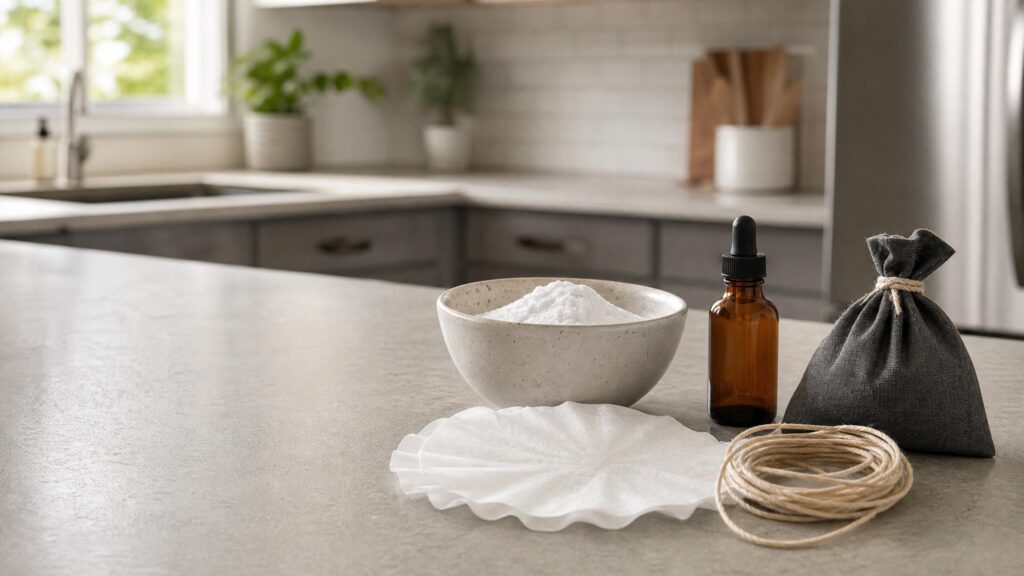
You only need a few basic supplies. The recipe is flexible, so do not overthink it.
- 1 cup baking soda
- 1 to 2 unbleached coffee filters, paper tea bags, or a small breathable cloth pouch
- String, twine, rubber band, or twist tie
- Optional: 5 to 15 drops essential oil
- Optional: 1 tablespoon activated charcoal for stronger odor control
- Small jar or container for storing extra mix
Use less essential oil than you think you need. A trash can deodorizer should smell mild, not perfumed. If you have pets, young children, allergies, or fragrance sensitivity in the home, skip the essential oil and use plain baking soda.
How to Make a DIY Trash Can Deodorizer
1. Mix the deodorizing base
Add 1 cup of baking soda to a small bowl. If you want a light scent, mix in 5 to 15 drops of essential oil. Lemon, lavender, peppermint, eucalyptus, and tea tree are common choices, but scent is optional.
Stir until the oil is evenly distributed. If the mixture forms clumps, break them apart with a spoon. The goal is a dry powder, not a wet paste.
2. Fill the pouch
Place 2 to 3 tablespoons of the baking soda mixture in the center of a coffee filter or breathable pouch. Do not overfill it. Air needs to move through the pouch so the baking soda can absorb odor.
If you are using a coffee filter, gather the edges at the top and tie them with string or a rubber band. The pouch should be closed well enough that powder does not spill into the bottom of the trash can.
3. Place it in the trash can
The best placement depends on where the odor collects. For most kitchen trash cans, place one pouch at the bottom of the can before adding the liner. If the lid smells, attach a small pouch inside the lid area with tape or a removable adhesive strip.
Keep the pouch away from wet garbage. If it gets soaked, throw it away and replace it. A wet deodorizer can clump, spill, or become part of the odor problem.
4. Replace it regularly
Replace the pouch every 2 to 4 weeks. In hot weather, or if the trash can holds food waste, replace it closer to every 1 to 2 weeks. If you notice odor returning sooner, that usually means the can needs cleaning or the trash is sitting too long.
Why Baking Soda Works Better Than Scented Bags
Scented trash bags can make a kitchen smell cleaner at first, but they often mask odor instead of reducing it. When food liquid leaks into the can or residue collects under the rim, fragrance does not remove the source. It just sits on top of it.
Baking soda is useful because it helps neutralize mild odors and absorbs moisture from small amounts of residue. It is not a substitute for cleaning, but it is a good maintenance layer between cleanings.
If your trash can still smells after changing the bag, use the full guide on how to keep a trash can from smelling. A deodorizer works best after the can itself is clean and dry.
Best Places to Put a Trash Can Deodorizer
Placement matters. A deodorizer hidden in the wrong spot may not do much.
- Bottom of the can: Best for general odor and small liner leaks.
- Inside the lid: Best when the lid traps food smell.
- Under the bag edge: Useful if the rim area smells after repeated spills.
- Outdoor bin corner: Helpful for mild odor, but replace more often because of heat and moisture.
- Bathroom bin: Use an unscented pouch if fragrance would be too strong in a small room.
For pedal cans and motion sensor cans, avoid placing a pouch where it can interfere with the lid, hinge, sensor, or closing mechanism. If the can has electronics, do not tape anything over the sensor area.
DIY Deodorizer Variations
Plain baking soda pouch
This is the safest and simplest version. Use only baking soda in a coffee filter or cloth pouch. It is the best choice for homes with pets, babies, allergies, or fragrance sensitivity.
Baking soda and essential oil
Add a small amount of essential oil if you want a light scent. Start with 5 drops per cup of baking soda and increase only if needed. Too much oil can make the pouch damp or overpowering.
Baking soda and activated charcoal
For stronger odor control, mix 1 tablespoon of activated charcoal into the baking soda. This can help with persistent odors, especially in warm kitchens or outdoor bins. Use a pouch that closes securely because charcoal powder can be messy.
Reusable cloth pouch
A small breathable cloth bag works well if you want less paper waste. Empty and refill it regularly. Wash the pouch if it starts smelling or gets damp.
When a Deodorizer Is Not Enough
A DIY trash can deodorizer helps with mild odor, but it cannot fix a dirty trash can. If the smell is strong, sour, rotten, or still noticeable after replacing the bag, clean the can first.
Common signs that you need cleaning, not just deodorizing:
- The bottom of the can feels sticky or damp.
- The lid smells even when the bag is empty.
- Odor comes back within a day of changing the bag.
- The bag has leaked food liquid into the can.
- The smell gets worse in hot weather.
In those cases, wash the can with soap and water, scrub under the rim, clean the lid, and let everything dry completely. Use this guide on how to clean a trash can if the odor is coming from residue rather than the current bag.
How Often Should You Replace a DIY Trash Can Deodorizer?
For a normal indoor kitchen trash can, replace the deodorizer every 2 to 4 weeks. Replace it sooner if the kitchen is warm, the trash includes food scraps, the pouch gets wet, or the smell returns quickly.
| Trash can type | Replacement schedule |
|---|---|
| Bathroom bin | Every 4 weeks |
| Kitchen trash can | Every 2 to 4 weeks |
| Food-heavy kitchen bin | Every 1 to 2 weeks |
| Outdoor trash bin | Every 1 to 2 weeks in warm weather |
| Motion sensor can | Every 2 to 4 weeks, away from electronics |
During summer, trash can odor builds faster. If heat is the main issue, pair the deodorizer with the habits in summer trash can smells.
Common Mistakes
- Using too much essential oil: Strong scent can make the bin smell worse, especially with food waste.
- Putting the pouch on wet residue: Clean and dry the can first.
- Forgetting the lid: Odor often sticks under the lid and around the rim.
- Leaving it too long: Replace the pouch before it stops working.
- Expecting it to fix leaks: Use better-fitting bags if liquid keeps reaching the bottom of the can.
FAQ
What is the best homemade trash can deodorizer?
The best simple homemade trash can deodorizer is a baking soda pouch made with a coffee filter, paper tea bag, or breathable cloth pouch. It is cheap, easy to replace, and works well for mild kitchen trash odors.
Can I put baking soda directly in the bottom of the trash can?
Yes, but a pouch is cleaner. Loose baking soda can spill, clump, or stick to leaked liquid. A pouch keeps the deodorizer contained while still letting air pass through.
Do essential oils remove trash can odor?
Essential oils add scent, but they do not replace cleaning or odor absorption. Use them lightly. If the trash can already smells bad, clean the can before adding fragrance.
Can I use this in a motion sensor trash can?
Yes, but keep the pouch away from the sensor, motor, hinge, and battery compartment. Do not attach anything over the sensor window or anywhere moisture could reach electronics.
Why does my trash can still smell after using a deodorizer?
The can probably needs cleaning, the bag may be leaking, or food waste is staying too long. A deodorizer helps control mild odors, but it cannot remove sticky residue, spoiled food liquid, or grime under the lid.
Bottom Line
A DIY trash can deodorizer is worth using, but only as part of a simple odor-control routine. Make a baking soda pouch, place it where odor collects, replace it regularly, and clean the can whenever smell returns after changing the bag. The goal is not a perfumed trash can. The goal is a trash can that smells like nothing.