
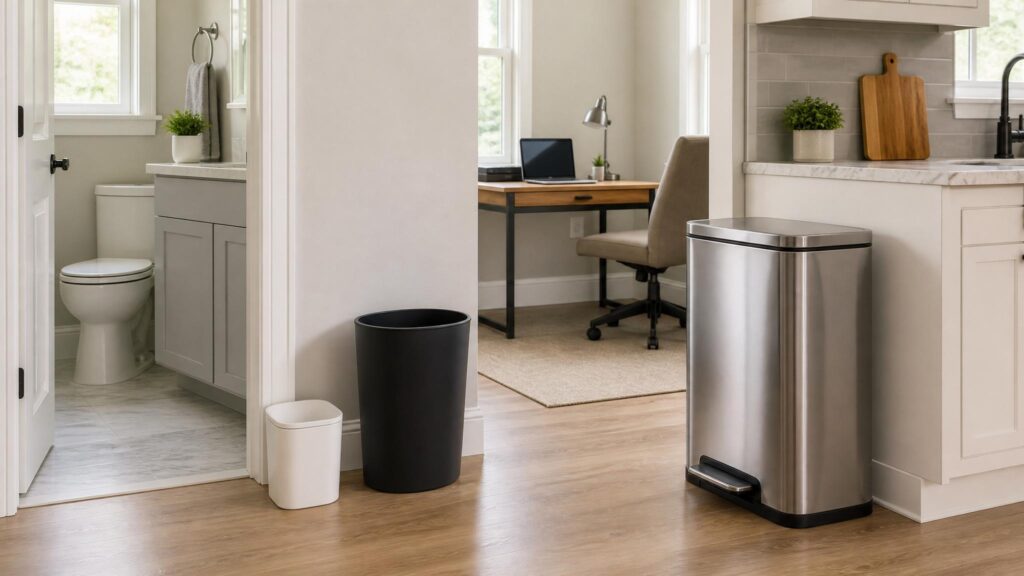
Choosing the right trash can size by room prevents two common problems: tiny bins that overflow constantly and oversized bins that let trash sit long enough to smell. The right size depends on the room, the type of waste, how many people live in the home, and how often you empty the trash.
If you want a quicker starting point for your room, household size and emptying routine, use the Trash Can Size Selector before choosing a can.
For most U.S. homes, a 13-gallon kitchen trash can is the standard starting point. Bathrooms, bedrooms, and offices usually need much smaller cans.
| Room | Recommended size | Best use |
|---|---|---|
| Kitchen | 10-16 gallons | Food waste and packaging |
| Bathroom | 1-3 gallons | Tissues, wrappers, hygiene waste |
| Bedroom | 1.5-3 gallons | Tissues, paper, light trash |
| Home office | 2-4 gallons | Paper and dry waste |
| Laundry room | 3-7 gallons | Lint, packaging, dryer sheets |
| Garage | 20-32 gallons | Utility waste and larger items |
Kitchen Trash Can Size
The kitchen usually needs the largest indoor trash can because it handles food scraps, packaging, paper towels, wrappers, and household waste. A 13-gallon can is the most common kitchen size because it fits standard tall kitchen bags.
Choose 10 to 12 gallons for a small kitchen, apartment, or household that empties trash often. Choose 13 gallons for most households. Choose 15 to 16 gallons only if you have space and regularly fill a standard can too quickly. For tighter layouts, use the small-kitchen trash can size guide before comparing products.
For a product shortlist focused on tight floor plans, compare best small kitchen trash cans after you know your room size and lid-clearance limits.
Do not go too large if food waste sits in the can for days. Bigger is not always better. A large kitchen can that is emptied too rarely can create odor problems.
Bathroom Trash Can Size
Most bathrooms only need a 1 to 3 gallon trash can. Bathroom waste is usually light and small, so a compact bin is enough.
A lid can be useful in shared bathrooms, guest bathrooms, or any bathroom where you want waste hidden. A small step-on can works well because it keeps the bin compact and hands-free.
Bedroom Trash Can Size
A bedroom usually works best with a 1.5 to 3 gallon trash can. It should be large enough for tissues, receipts, tags, paper, and small wrappers, but not so large that trash sits for weeks.
Style matters more in bedrooms because the bin may be visible. A small plastic, metal, or woven-look can can work as long as it is easy to empty and clean.
Home Office Trash Can Size
For a home office, 2 to 4 gallons is usually enough. Most office trash is dry waste: paper, sticky notes, packaging, and snack wrappers.
If the office also handles shredded paper, consider a separate shredder bin. If you eat at your desk often, use a lidded bin or empty it more frequently to avoid odor.
Laundry Room and Utility Room Size
Laundry rooms usually need a 3 to 7 gallon bin for lint, dryer sheets, tags, empty detergent packaging, and small household waste. If the room doubles as a mudroom or cleaning storage area, go closer to 7 gallons.
A lid is optional unless the bin holds pet waste, dirty rags, or anything damp. For dry lint and packaging, an open bin can be easier.
Garage and Outdoor Trash Can Size
Garage trash cans are usually larger because they handle bulkier waste. A 20 to 32 gallon heavy-duty plastic can is common for utility areas. Outdoor curbside bins are often larger and may be provided by the city or waste service.
For garages, choose durability over appearance. A heavy-duty plastic can with a secure lid is usually more practical than a decorative indoor can.
How Household Size Changes the Answer
| Household | Kitchen size starting point | Notes |
|---|---|---|
| 1 person | 8-10 gallons | Good if emptied often |
| 2 people | 10-13 gallons | 13 gallons if cooking often |
| 3-4 people | 13 gallons | Standard best fit |
| 5+ people | 13-16 gallons | Consider more frequent emptying |
| Heavy cooking | 13-16 gallons | Control food waste odor |
If your kitchen trash smells before the bag is full, the can may be too large for your emptying schedule. Use a smaller can or take food waste out sooner.
Bag Compatibility Matters
Trash can size should match bags you can buy easily. A 13-gallon kitchen can is convenient because tall kitchen bags are widely available. Odd-size cans can work, but they may require special liners or awkward bag fitting.
A poor bag fit causes slipping, tearing, and leaks. If that is already happening, use the fixes in trash can hacks.
Lid or No Lid by Room
Size is not the only choice. The lid style matters too. A lid helps hide waste and contain odor, but it can also make a small bin less convenient if the room mostly has dry trash.
| Room | Lid recommendation | Why |
|---|---|---|
| Kitchen | Lid recommended | Controls food odor and hides waste |
| Bathroom | Lid recommended in shared spaces | Better hygiene and appearance |
| Bedroom | Optional | Mostly light dry waste |
| Office | Usually no lid | Paper waste is easier to toss |
| Laundry room | Optional | Depends on lint vs damp waste |
| Garage | Lid recommended | Controls pests and larger waste |
When to Size Up or Size Down
Use the recommended sizes as a starting point, then adjust based on real use.
- Size up if the bag overflows before normal trash day.
- Size up if you cook often and packaging fills the can quickly.
- Size down if food waste smells before the bag is full.
- Size down if a large can blocks movement in a small room.
- Use two smaller bins if recycling, compost, or dry waste needs separation.
Small Space Tips
In apartments, narrow kitchens, bathrooms, and under-sink cabinets, shape can matter as much as gallon size. A slim rectangular can may fit better than a round can with the same capacity.
Measure width, depth, and lid clearance before buying. Step-on cans need foot space in front. Swing lids and motion sensor lids need room above. Pull-out cabinet bins need enough clearance to slide fully open.
If the can is hidden inside a cabinet, prioritize fit, bag compatibility, and easy removal over appearance.
Common Mistakes
- Using the same size in every room: each room has different waste.
- Going too small in the kitchen: this causes overflow and overfilled bags.
- Going too large for food waste: trash sits longer and smells worse.
- Ignoring bag size: special-size liners are inconvenient.
- Choosing looks over use: a pretty can still needs to fit the room’s trash habits.
Simple Buying Checklist
- Measure the space before choosing a size.
- Check that common bags fit the can.
- Choose a lid if the can holds food, bathroom waste, or garage waste.
- Choose easy-clean material for rooms with wet trash.
- Make sure the can can be emptied before odor builds.
- For kitchens, start with 13 gallons unless space or routine suggests otherwise.
Examples by Home Type
A small apartment may only need a 10 to 13 gallon kitchen can, one bathroom bin, and one small bedroom or office bin. A family home may need a 13 gallon kitchen can, multiple bathroom bins, a laundry room bin, and a larger garage or outdoor utility can.
If a household cooks daily, trash volume and odor risk rise quickly. In that case, a 13 gallon kitchen can with frequent emptying is usually better than a huge indoor can that holds food waste for too long.
If the household produces mostly dry waste, such as paper and packaging, a slightly larger office or utility bin may be fine because odor is less of a concern.
Trash Can Size and Odor Control
Size affects smell. A too-small can leads to overfilled bags, torn liners, and trash pressed against the lid. A too-large can lets food waste sit longer. The best size is not the biggest one you can fit; it is the one you will empty at the right time.
If odor is the reason you are changing cans, read how to keep a trash can from smelling before buying a larger bin.
FAQ
What size trash can is best for a kitchen?
A 13-gallon trash can is best for most kitchens because it fits standard tall kitchen bags and holds a practical amount of household waste.
What size trash can is best for a bathroom?
Most bathrooms need a 1 to 3 gallon trash can. A small lidded or step-on can is best for shared bathrooms.
Is a bigger trash can better?
Not always. A bigger can reduces emptying frequency, but it can also let food waste sit longer and smell worse. Match size to your routine.
How many trash cans should a home have?
Most homes need at least one kitchen can, one bathroom can, and small bins for bedrooms, offices, laundry rooms, or garages as needed.
What size trash can fits under a sink?
Many under-sink cans are around 7 to 10 gallons, but cabinet space varies. Measure the cabinet width, depth, plumbing clearance, and lid movement before buying.
What size trash bag fits a 13-gallon can?
A standard tall kitchen trash bag usually fits a 13-gallon kitchen can. Always check the can shape and rim design because fit can vary between models.
Bottom Line
Use a 13-gallon trash can as the default kitchen choice, 1 to 3 gallons for bathrooms and bedrooms, 2 to 4 gallons for offices, and larger heavy-duty cans for garages or outdoor utility use. The best trash can size is the one that fits the room, fits common bags, and gets emptied before odor becomes a problem.