
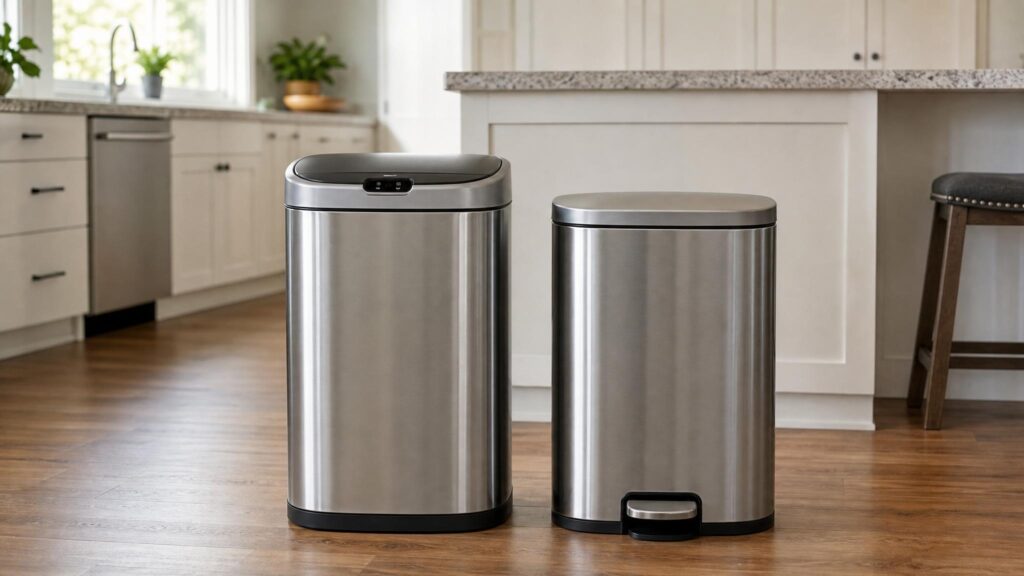
The motion sensor vs step-on trash can decision comes down to convenience versus reliability. A motion sensor trash can opens without touch, which can feel cleaner when your hands are full or messy. A step-on trash can uses a foot pedal, which is simpler, usually cheaper, and less likely to have electronic problems.
Neither style is automatically better for every kitchen. The right choice depends on your space, pets, kids, cleaning habits, budget, and tolerance for batteries or sensors.
| Priority | Better choice | Why |
|---|---|---|
| Hands-free hygiene | Motion sensor | Opens without touching or stepping |
| Reliability | Step-on | No sensor or batteries |
| Lower cost | Step-on | Usually cheaper |
| Pets nearby | Step-on | Less likely to open accidentally |
| Modern kitchen look | Motion sensor | Often sleeker and more high-tech |
| Easy cleaning | Step-on | No electronics to protect |
Fast answer: choose a step-on trash can if you want the most reliable everyday kitchen bin with fewer battery, sensor and accidental-opening problems. Choose a motion sensor trash can if touchless opening is worth the extra maintenance and you can place it away from pets, direct traffic and tight cabinet clearance.
For most kitchens, step-on is the safer default. Motion sensor is the upgrade when no-touch use matters more than simplicity. If you are still unsure, use the touchless trash can value guide before paying extra for an automatic lid. If odor is the reason you are upgrading, also check lid fit, bag fit and cleaning routine before blaming the opening style.
Quick Verdict
Choose a motion sensor trash can if you want touchless opening, like a modern look, and do not mind batteries or careful lid cleaning. Choose a step-on trash can if you want a dependable kitchen bin that works every day with less maintenance.
For most households, a good step-on trash can is the safer practical choice. A motion sensor can is better when touchless use is the main priority.
What Is a Motion Sensor Trash Can?
A motion sensor trash can, also called a touchless or automatic trash can, uses a sensor in the lid to detect movement. When you wave your hand or place an item near the sensor area, the lid opens automatically and usually closes after a short delay.
The main benefit is that you do not need to touch a lid, handle, or pedal. This is useful when handling food scraps, raw meat packaging, wet paper towels, or anything messy.
The downside is that the lid depends on electronics. The sensor window can get dirty, batteries can run low, and the lid may open unexpectedly if the sensor is triggered by pets, movement, reflections, or placement near a busy walkway.
What Is a Step-On Trash Can?
A step-on trash can opens when you press a foot pedal. It is still hands-free, but it uses a mechanical pedal instead of a sensor. This makes it simple and predictable.
Step-on cans are usually easier to live with because there are no sensors, batteries, or electronic lid parts. You press the pedal, the lid opens, and when you stop pressing, the lid closes. A soft-close lid can make the motion quieter and cleaner.
The main downside is that you need enough space in front of the can to step on the pedal comfortably. Cheap pedal mechanisms can also break or become loose over time.
Hygiene and Food Prep
Motion sensor cans win on the pure no-contact experience. If you are cooking and need to throw away packaging or food scraps, automatic opening is convenient. You do not touch the lid, and you do not need to press a pedal with your foot.
Step-on cans are still hygienic for most homes because your hands do not touch the lid. The pedal does the work. The difference is that you use your foot instead of a sensor.
For normal kitchen use, both are better than lifting a lid by hand. The bigger hygiene issue is whether the rim, lid underside, and bag area get cleaned regularly.
Reliability and Maintenance
This is where step-on cans usually win. A step-on can has fewer things that can go wrong. If the pedal and hinge are decent, it can work for years with basic cleaning.
A motion sensor can needs more care. The sensor window must stay clean, the battery compartment needs to stay dry, and the lid should not be soaked or sprayed directly. Weak batteries can make the lid slow, inconsistent, or unresponsive.
If you choose a motion sensor model, learn how to clean a motion sensor trash can safely so you do not damage the electronics while trying to remove odor or grime.
Pets, Kids, and Accidental Opening
Motion sensor cans can be annoying in homes with curious pets or toddlers. A dog, cat, child, or passing movement may trigger the lid. That can lead to unnecessary opening, odors escaping, or pets becoming more interested in the trash.
Step-on cans are more predictable. The lid opens only when someone presses the pedal. That does not make them pet-proof, but it reduces random opening.
If pets are a serious issue, the most important feature may not be sensor vs pedal. It may be a locking lid, heavier base, or a cabinet location.
Cleaning and Odor Control
Step-on cans are easier to clean because there are no electronics in the lid. You can wipe the lid, rim, pedal, and inner bucket without worrying as much about moisture.
Motion sensor cans need more careful cleaning. You can wash the removable bucket, but the sensor lid should be wiped gently. Do not spray cleaner directly into the sensor, motor housing, buttons, or battery area.
For odor control, lid fit and bag leaks matter more than opening style. If the can smells after the bag is removed, use how to clean a trash can and then add a simple DIY trash can deodorizer.
Noise and Daily Use
Motion sensor lids can make a small motor sound when opening or closing. It is usually not loud, but it may be noticeable in a quiet kitchen, especially at night.
Step-on cans can be nearly silent if they have a soft-close lid. Cheap step-on cans may clang if the lid drops quickly, so look for soft-close if noise matters.
Cost and Long-Term Value
Step-on cans usually cost less and offer better long-term simplicity. Even a higher-quality step-on model may be a better value than a cheap motion sensor can with weak electronics.
Motion sensor cans cost more because of the automatic lid mechanism. They can be worth it if touchless opening is important, but the extra cost should buy better build quality, not just a flashy feature.
Battery Use and Power Issues
Motion sensor trash cans usually run on batteries, though some models may include a plug-in option. Batteries are not a major problem, but they add one more maintenance task. Weak batteries can make the lid open slowly, stop halfway, or fail to respond every time.
If you choose a motion sensor can, keep spare batteries nearby and check the battery compartment when cleaning. Any sign of corrosion, moisture, or loose contact should be handled early. A step-on can avoids this entire issue because it is fully mechanical.
Bag Changes and Real Kitchen Workflow
Bag changes are easy to overlook when comparing trash cans. A good trash can should make it simple to remove a full bag without tearing it and simple to secure a new liner without the bag slipping into the can.
Some motion sensor cans have wide lids or bag rings that make liner changes easy. Others make the lid feel bulky. Step-on cans are usually straightforward, but cheap models may have rims that do not hold bags well.
If bag slipping and tearing are common problems in your kitchen, the opening style matters less than the liner fit. The guide to trash can hacks covers practical fixes for bag slip, leaks, and odor.
Best Choice by Situation
| Situation | Recommended style | Reason |
|---|---|---|
| Busy family kitchen | Step-on | Reliable and easier to clean |
| Cooking-heavy household | Motion sensor or step-on | Both are hands-free |
| Pets in the home | Step-on | Less accidental opening |
| Modern kitchen design | Motion sensor | Sleek and convenient |
| Small kitchen | Depends on layout | Check pedal room and lid clearance |
| Low-maintenance priority | Step-on | No electronics or batteries |
Space and Placement
Before buying either style, check the space around the can. A step-on can needs clear floor space in front so you can press the pedal. A motion sensor can needs enough space above the lid and should not sit where people constantly pass close to the sensor.
Do not place a motion sensor can directly under a low counter if the lid cannot open fully. Do not place a step-on can so tightly against a wall or cabinet that the pedal is awkward to use.
Common Buying Mistakes
- Buying motion sensor just because it looks modern: Make sure you are comfortable with batteries and careful cleaning.
- Buying a cheap pedal can: A weak pedal can break faster than a good automatic lid.
- Ignoring pets: Motion sensors can open at the wrong time in pet-heavy homes.
- Forgetting lid clearance: Both styles need room to open properly.
- Choosing the wrong size: An overfilled can smells worse and causes more bag leaks.
What to Check Before Buying
Before choosing either style, check the details that affect daily use. A trash can can look good online and still be annoying in a real kitchen if the lid opens too slowly, the pedal feels weak, or standard bags do not fit well.
- Does the lid open high enough for normal trash?
- Does the can fit standard kitchen trash bags?
- Is the inner bucket removable?
- Does the lid close softly or slam?
- Can the rim and lid underside be cleaned easily?
- Will the can fit your exact kitchen space?
FAQ
Are motion sensor trash cans worth it?
They can be worth it if touchless opening is important and you are willing to maintain the sensor lid. If you want the simplest reliable option, a step-on can is usually better.
Do motion sensor trash cans open by themselves?
They can open unexpectedly if the sensor is triggered by movement, pets, reflections, direct sunlight, or placement in a busy area. Keeping the sensor clean and positioning the can carefully helps.
Are step-on trash cans sanitary?
Yes, step-on trash cans are sanitary for normal home use because your hands do not touch the lid. Clean the pedal, rim, and lid regularly, especially in kitchens.
Which is better for pets, motion sensor or step-on?
Step-on is usually better for pets because it is less likely to open accidentally. If a pet can still get into the trash, look for a locking lid or move the can into a cabinet.
Which trash can type lasts longer?
A quality step-on can usually has the advantage because it has no electronics. A motion sensor can can last well too, but the sensor, motor, and battery area add more possible failure points.
If you are comparing touchless wording, check the newer touchless-vs-step guide too. This page explains motion sensor cans broadly; touchless vs step trash can focuses on the everyday buying decision, including hygiene, reliability, pets, battery friction and placement.
Bottom Line
A motion sensor trash can is best if you want the cleanest touchless experience and like the convenience of automatic opening. A step-on trash can is best if you want reliability, lower cost, easier cleaning, and fewer surprises. For most homes, step-on is the practical winner. For touchless convenience, motion sensor can be worth it if you buy a good model and maintain it carefully.