
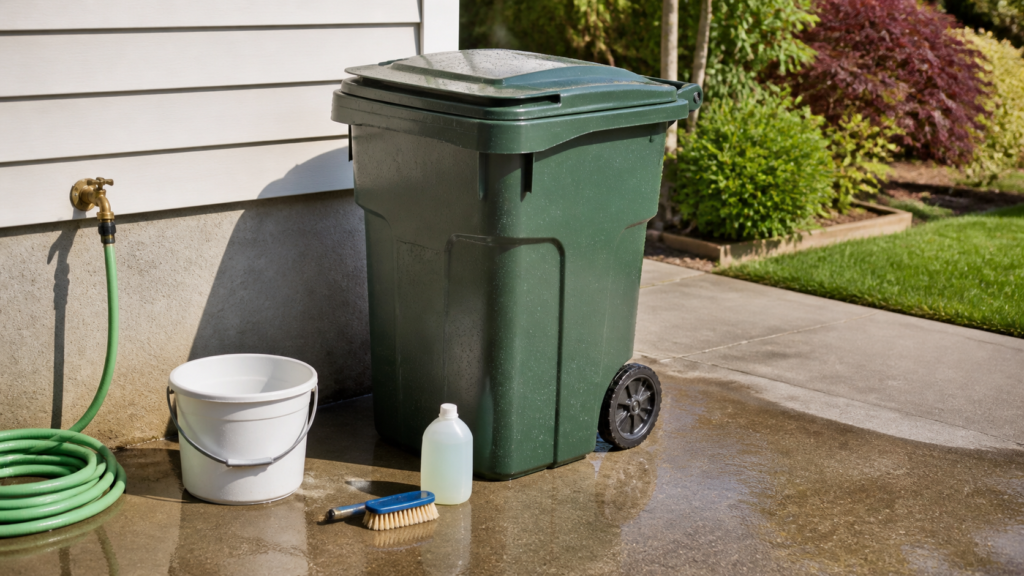
The best time to clean an outdoor trash can is right after pickup, when the bin is empty. Rinse loose debris first, scrub the bottom, sides, rim and lid with warm soapy water, rinse again, then let the can dry before adding new bags.
Safety note: use household cleaners only as labeled, work with ventilation, keep children and pets away while cleaning, and never mix bleach with vinegar, ammonia or other cleaners. For pet ingestion, large-wildlife rules, illness, heavy infestations or anything beyond routine household cleanup, use a veterinarian, official local guidance or a qualified professional.
Outdoor garbage cans get worse than indoor cans because they collect leaking bags, food liquid, heat, rainwater, pet waste and lid grime. If you only spray the bottom and ignore the rim and lid underside, the smell usually comes back.
| Problem | First fix | Extra step |
|---|---|---|
| Food residue on bottom | Rinse, scrub with dish soap and warm water | Use a long-handled brush |
| Strong odor | Wash all surfaces, not just the bottom | Let the bin dry fully |
| Maggots or flies | Remove trash, clean after pickup | Fix bag leaks and lid gaps |
| Sticky rim or lid | Wipe with soapy water | Check the lid underside |
| Recurring leaks | Change bag fit or bag strength | Use tied bags only outdoors |
What You Need
- Gloves
- Garden hose or buckets of water
- Dish soap or a trash-can-safe cleaner
- Long-handled brush
- Old towel or open-air drying time
Step 1. Empty the Can Completely
Do not try to deep clean around loose trash. Wait until collection day if possible. If the can still has broken bags inside, seal or remove them first so you are not spreading food liquid while you clean.
Step 2. Rinse Loose Debris
Tip the can where runoff is allowed and rinse the bottom, corners and lower walls. The goal is to remove loose liquid and grit before scrubbing. If the can has dried-on food residue, let warm soapy water sit briefly before brushing.
Step 3. Scrub the Bottom, Walls, Rim and Lid
Most people scrub the bottom and miss the top edge. That is a mistake. Flies and odor often follow residue on the rim, handle area and underside of the lid. Scrub those areas before rinsing.
If the smell is the main problem, use the broader guide on how to keep a trash can from smelling. If the can already has larvae, use how to get rid of maggots in a trash can before moving into prevention.
Step 4. Rinse and Dry
Rinse until the water runs clear. Then let the outdoor can dry with the lid open only as long as needed. A damp can with new trash inside creates the same conditions that caused the smell.
If maggots keep returning after cleaning, the issue is prevention. Pair this cleaning routine with how to keep maggots out of a trash can so food scraps, leaks, moisture and lid gaps do not restart the cycle.
How Often Should You Clean It?
| Situation | Cleaning rhythm |
|---|---|
| No leaks, no odor | Quick rinse as needed, deeper clean monthly or seasonally |
| Food bag leaked | Clean after the next pickup |
| Hot weather odor | Check weekly and clean after leaks |
| Flies or maggots | Clean immediately after the active mess is gone |
| Pet waste or meat scraps | Use tied bags and clean more often in heat |
How to Keep It Cleaner Afterward
- Tie kitchen bags before placing them in the outdoor cart.
- Do not put loose food waste directly into the outdoor can.
- Fix kitchen bag leaks before they reach the cart. Start with how to stop trash bag leaks.
- Keep the lid closed between uses.
- Move the bin to shade if allowed and practical during hot weather.
What to Clean First if the Can Is Really Bad
If the outdoor trash can has old liquid in the bottom, start there. Do not spend time polishing the outside while the inside still has food sludge, leaked bag liquid or wet yard waste stuck in the corners. Rinse the bottom first, scrub the lower seams, then work up to the walls, rim and lid.
The lid underside is the most common missed area. It catches splatter when bags are thrown in, and it can hold odor even after the bottom looks clean. Handles and wheels also matter because they collect residue from hands, gloves and runoff.
Cleaning Products to Keep Simple
For most outdoor garbage cans, warm water, dish soap and a stiff brush are enough. The brush matters more than the scent of the cleaner. If you use a disinfectant, follow the label for dilution, contact time, surface type and rinsing. More product does not automatically mean a cleaner can.
Avoid mixing cleaners. That is especially important with bleach products. Keep the routine boring: loosen debris, scrub with one cleaner, rinse thoroughly and dry. The boring version is usually the one people can repeat without turning a simple job into a chemical experiment in the driveway.
Where to Clean the Can
Clean the can somewhere runoff is allowed and will not carry trash residue into a vegetable garden, pool area or neighbor’s property. If you live in an apartment, HOA or city with drainage rules, use the least messy method available: wipe out leaks with disposable towels first, then use a controlled rinse instead of blasting debris across the ground.
Frequently Asked Questions
Can I use bleach to clean an outdoor trash can?
You can use a disinfecting product if the label allows it for the surface, but many routine cleanups only need soap, scrubbing, rinsing and drying. Never mix bleach with vinegar, ammonia or other cleaners.
Why does my outdoor trash can smell after cleaning?
The usual causes are hidden residue on the rim or lid, a damp can that was relined too soon, or another leaking bag. Clean the lid and rim, then let the can dry fully.
Should I clean an outdoor trash can with maggots in it?
Remove or kill the active larvae first, then wash the can. Afterward, prevent the next cycle by tying bags, fixing leaks and keeping the lid closed.