
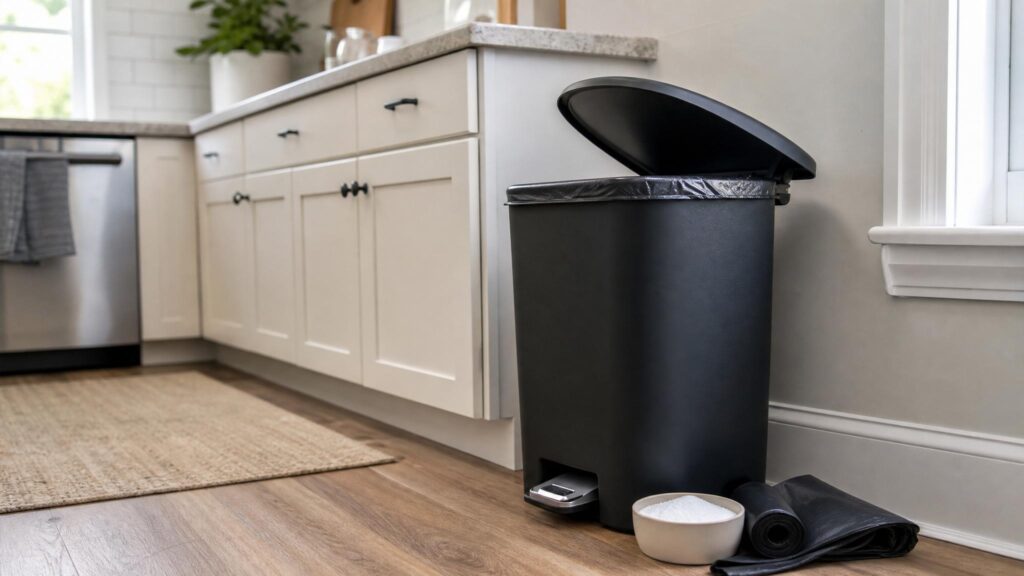
Learning how to keep a trash can from smelling is mostly about controlling three things: food waste, moisture, and bacteria. A fresh bag helps, but it does not solve the problem if liquids leak into the bottom of the bin, food residue sticks to the lid, or the can stays damp after cleaning.
If you are not sure what is causing the smell, use the Trash Can Odor Diagnosis Checklist before buying stronger bags, deodorizers or a new can.
If the smell keeps coming back because the can itself traps food odor, the next step is choosing a better lid and liner setup. See our guide to trash cans that help with kitchen odor control.
The good news is that most trash can odors are easy to prevent once you know where they come from. You do not need expensive sprays or a complicated cleaning routine. A few simple habits can make a kitchen trash can smell like nothing, which is exactly the goal.
| Problem | Fast fix |
|---|---|
| Food scraps smell quickly | Take trash out sooner and wrap wet scraps |
| Odor stays after changing the bag | Wash the can, lid, rim, and bottom |
| Moisture collects in the bin | Use baking soda or an absorbent liner |
| The lid traps odor | Clean the lid and check for stuck residue |
| Summer makes smells worse | Empty more often and separate food waste |
1. Empty Food Waste Before It Starts Rotting
The fastest way to prevent trash can odor is to stop food waste from sitting too long. Meat scraps, fish packaging, spoiled fruit, rice, wet paper towels, and coffee grounds can all start smelling quickly, especially in warm kitchens.
If the bag is not full but contains wet or strong-smelling waste, take it out anyway. Waiting until the bag is packed saves one liner, but it often creates a bigger odor problem inside the can.
- Wrap wet food scraps in newspaper or a small paper bag before tossing them.
- Take out trash more often during hot weather.
- Do not leave seafood, meat, or spoiled food in the kitchen bin overnight.
2. Clean the Can Itself, Not Just the Bag
If a trash can still smells after changing the bag, the odor is probably not coming from the current trash. It is usually stuck inside the can, under the rim, on the lid, or in the bottom where leaked liquid dries into a thin layer of residue.
A simple cleaning routine works well:
- Remove the bag and loose debris.
- Rinse the inside of the can.
- Scrub the bottom, walls, lid, and rim with warm water and dish soap.
- Use baking soda on stubborn odor spots.
- Rinse again and let the can dry completely before adding a new bag.
Drying matters. A clean but damp trash can can still smell bad because moisture gives bacteria a place to grow.
For a deeper routine, use the full guide on how to clean a trash can.
3. Use Baking Soda, Charcoal, or Other Odor Absorbers
Strong fragrances can make a trash can smell like perfume mixed with garbage. Odor absorbers are usually better because they reduce the smell instead of just covering it.
- Baking soda: Sprinkle a small amount at the bottom of the bin or place it in a coffee filter pouch.
- Activated charcoal: Use a small charcoal filter or pouch under the lid.
- Coffee grounds: Use only dry grounds to avoid adding moisture.
- Citrus peels: These can help briefly, but they should not sit in the bin for days.
If you want a simple homemade option, see this DIY trash can deodorizer.
4. Use Strong Trash Bags That Do Not Leak
Thin trash bags are one of the most common reasons a trash can starts smelling. Even a small leak can leave food liquid at the bottom of the bin, and that residue can smell long after the bag is gone.
Choose bags that fit the can properly and are strong enough for the type of waste you throw away. A bag that is too small stretches and tears. A bag that is too large can slip, fold, and trap food around the edges.
- Do not overfill the bag.
- Tie the bag tightly before removing it.
- Use thicker bags for kitchen waste.
- Check the bottom of the can after any heavy or wet bag.
5. Clean the Lid and Rim
The lid is easy to forget, but it often holds more odor than the bottom of the can. Food residue can splash onto the underside of the lid, and moisture can collect around hinges, pedals, or sensor openings.
When cleaning the bin, wipe the lid, rim, handle, and any area where the bag folds over the edge. If your trash can has a tight lid, this step matters even more because trapped moisture can make odors stronger.
6. Separate Compost and Wet Scraps
Food waste is usually the strongest source of kitchen trash odor. Separating compostable scraps can reduce smell dramatically, especially if your household cooks often.
A small countertop compost bin with a lid can keep vegetable peels, fruit scraps, coffee grounds, and other organic waste out of the main trash can. Empty it regularly and keep it away from direct heat.
7. Control Moisture at the Bottom of the Bin
Odor gets worse when moisture collects at the bottom of the trash can. Even if the bag does not fully leak, condensation, food liquid, and damp paper can create a wet layer underneath the liner.
Try one of these simple moisture-control methods:
- Place a folded paper towel under the liner.
- Sprinkle a small amount of baking soda at the bottom.
- Use a washable liner for bins that often leak.
- Check the bottom weekly, even if the bag looks fine.
8. Build a Simple Weekly Trash Can Routine
The best way to keep a trash can from smelling is to make odor control automatic. You do not need to deep clean the bin every day. A small routine is enough for most kitchens.
- Daily: remove food waste before it sits too long.
- Weekly: check the bottom of the bin and wipe the lid.
- Monthly: wash and fully dry the trash can.
- Summer: empty more often and use odor absorbers.
If heat is the main problem, read the guide to summer trash can smells.
What to Do If the Smell Comes Back Fast
If the trash can smells again within a day or two, the problem is usually not the deodorizer. It is usually one of three things: leaked liquid, trapped moisture, or food waste sitting too long in a warm can.
- Check the bottom: even a thin sticky layer can smell after the bag is gone.
- Check the lid: odor often collects on the underside, hinge area, and rim.
- Check bag fit: a bag that is too small can stretch, tear, or slip into the can.
- Check moisture: a clean but damp bin can start smelling again quickly.
When odor returns quickly, wash the can first, dry it fully, then add a simple odor absorber. Adding baking soda to a dirty, damp can only hides the symptom for a short time.
Best Odor Control by Trash Can Type
| Trash can type | Best odor-control habit |
|---|---|
| Open kitchen can | Empty food waste sooner and use an absorbent layer |
| Lidded kitchen can | Clean the underside of the lid and rim weekly |
| Step-on can | Wipe the pedal area and hinge where residue collects |
| Motion sensor can | Keep deodorizer away from electronics and clean the lid gently |
| Outdoor bin | Rinse after pickup, dry in sun, and keep food waste contained |
Different cans trap odor in different places. A stainless kitchen can may look cleaner but still smell if the plastic inner bucket is dirty. A plastic can may need more frequent scrubbing if food liquid has sat in the bottom. Match the habit to the can, not just the material.
If the can is new but already smells, check the trash routine before blaming the material. If the can is old and smells even after proper cleaning, scratched plastic, damaged lids, or hidden residue may be making odor harder to remove.
Frequently Asked Questions
How often should you clean a trash can?
For a kitchen trash can, a quick wipe once a week and a deeper clean once a month is a practical routine. Clean it sooner if a bag leaks or food waste spills inside.
What absorbs trash can odors best?
Baking soda and activated charcoal are two of the simplest odor absorbers. They work better than strong fragrances because they help neutralize odor instead of just covering it.
Why does my trash can still smell after changing the bag?
The odor is usually stuck inside the can, lid, rim, or bottom surface. Leaked liquid, food residue, and moisture can remain even after the bag is removed.
Do stainless steel trash cans smell less than plastic?
Stainless steel usually holds less odor than plastic and is easier to wipe down. Plastic bins can absorb smells over time, especially if food liquid leaks into the bottom.
Are scented trash bags enough to stop trash odor?
Scented bags can help with mild smells, but they do not fix leaks, bacteria, or moisture inside the bin. Use them with regular cleaning and odor absorbers.
Final Takeaway
To keep a trash can from smelling, focus on the source: remove food waste sooner, prevent leaks, clean the can itself, control moisture, and use odor absorbers like baking soda or activated charcoal. The goal is simple: a trash can that does not smell like anything.