
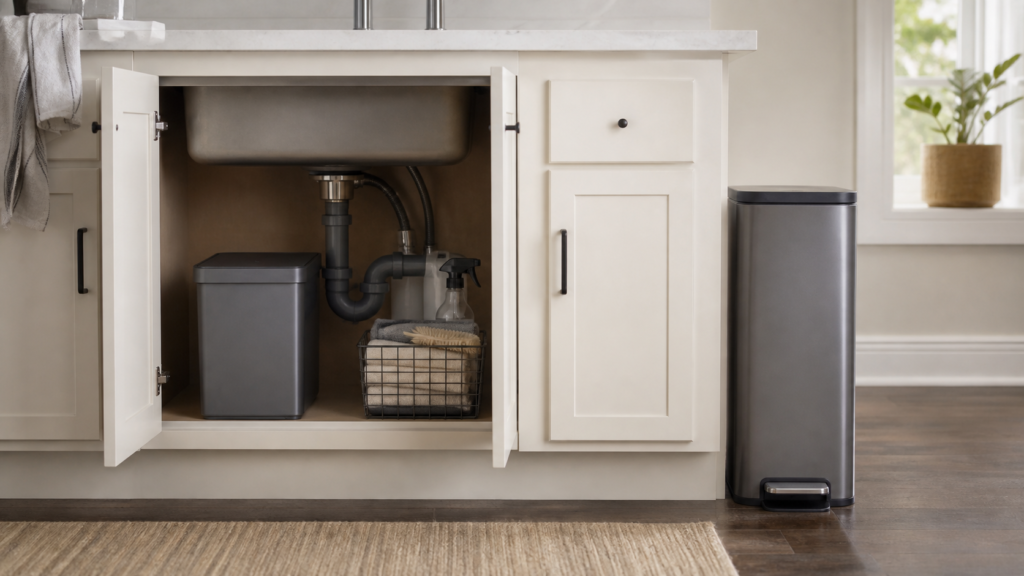
If you are choosing between an under-sink trash can and a slim step can, the honest answer is simple: neither option is always better. An under-sink can works best when the cabinet actually has the space for it and your biggest problem is floor clutter. A slim step can works better when you need faster access, easier bag changes, more practical capacity or a no-install setup.
The mistake is treating this as a style choice. In a small kitchen, the better trash setup depends on cabinet measurements, plumbing, daily cooking volume, odor risk, pets, renters, mobility and how often you need to change the bag.
Quick Verdict
Choose an under-sink trash can if you have a usable base cabinet, enough clearance around the plumbing and a strong reason to keep the bin off the floor. It can make a narrow kitchen feel cleaner and less crowded, especially when the trash sits near the prep area.
Choose a slim step can if you cook often, throw away bulky packaging, rent your home, have awkward under-sink plumbing, need easier bag changes or do not want to bend into a cabinet every time you use the trash. A visible can is not always worse. In many kitchens, it is simply easier to use and clean.
Do not switch setups just because the trash smells. Placement can help, but odor usually comes from food scraps, bag leaks, old residue, a loose lid or moisture trapped in the can. Start with how to keep a trash can from smelling and how to clean a trash can before assuming a new layout will solve the problem.
Measure Before You Choose
Before you buy anything for under the sink, measure the cabinet like the decision depends on it, because it does. A product that looks compact online can fail in a real cabinet because of a garbage disposal, curved plumbing, hinges, shelves or a door that does not open wide enough.
Before choosing either layout, measure the cabinet and floor space. Use the under-sink trash can size guide for clearance, then compare small under-sink trash cans with lids if odor control matters more than maximum capacity.
Check these measurements first:
- Cabinet width from side wall to side wall.
- Cabinet depth from the front frame to the back wall.
- Height below the sink bowl, shelf or disposal.
- Plumbing sweep, including pipes that curve forward or sideways.
- Door swing and hinge clearance.
- Space needed for a pull-out track, if you are considering one.
- Lid opening height, if the bin has a hinged or swinging lid.
- Room to lift out a full bag without scraping it against pipes.
If any of those measurements are tight, a slim step can is usually the safer starting point. That is especially true in rentals, where drilled pull-out hardware may not be allowed, or in older kitchens where the plumbing takes up more cabinet space than expected.
Decision Table: Under-Sink Vs Slim Step Can
| Situation | Better Starting Point | Why | Caveat |
|---|---|---|---|
| Tiny kitchen with usable cabinet | Under-sink can | Frees floor space near prep work. | Plumbing or depth can ruin the fit. |
| Daily cooking or bulky packaging | Slim step can | Easier to access, empty and clean. | Needs a spot outside the walkway. |
| Rental kitchen | Slim step can | No cabinet drilling or screw holes. | A loose under-sink bin may still work. |
| Dog or child gets into trash | Depends | A cabinet adds a barrier; a lockable can may be stronger. | Hidden does not mean secure. |
| Odor is the main concern | Depends | Hidden bins prompt emptying; lidded cans may hold odor better. | Food-waste habits matter more than placement. |
| Back strain or limited mobility | Slim step can | Less bending and easier bag removal. | Check pedal height and lid clearance. |
When An Under-Sink Trash Can Makes Sense
An under-sink trash can makes sense when the cabinet is genuinely usable and floor space is the bigger problem. In a galley kitchen, studio apartment or narrow cooking area, removing one visible bin from the walkway can make the room work better.
There are three common under-sink setups. A loose bin is the simplest: it sits inside the cabinet and can be pulled out by hand. A door-mounted bin attaches to the inside of the cabinet door. A pull-out rail system slides forward on tracks. The more hardware involved, the more important measurement becomes.
Under-sink works best when:
- The cabinet has clean width, depth and height around plumbing.
- You empty trash frequently enough that limited capacity is not a problem.
- You want the can near the sink or prep zone.
- You can remove the bag without dragging it across pipes.
- You are using removable hardware or you own the cabinet.
The main downside is friction. If the cabinet is crowded, every bag change becomes annoying. If food leaks under the liner, the smell can sit inside a closed cabinet longer before you notice it. Under-sink is not automatically cleaner. It is cleaner only when the setup is easy enough that you actually maintain it.
When A Slim Step Can Makes Sense
A slim step can makes sense when access matters more than hiding the bin. If you cook most days, toss packaging often or need a can that several people can use quickly, a visible pedal can is often the more practical choice.
The key is placement. A slim can should sit where it does not block the cooking triangle, cabinet doors, dishwasher, oven or main walking path. Corners, the end of a counter run and narrow gaps near a prep area can work, but only if the lid has room to open and the base does not tip easily.
Slim step cans are usually better when:
- The under-sink cabinet is full of plumbing, cleaning supplies or a disposal.
- You need easier bag changes and faster cleanup.
- You rent and want to avoid drilling or cabinet damage.
- You need less bending to throw trash away.
- You want to inspect leaks and residue quickly.
- Cabinet space is more valuable than floor space.
A slim step can is not automatically odor-proof. A loose lid, oversized bag, wet food scraps or old residue can still smell. If odor is the reason you are changing cans, compare models later with the odor-control buying guide, but fix the routine first.
Odor, Leaks And Cleaning
Odor is where many people choose the wrong solution. Hiding trash under the sink can make the kitchen look neater, but it can also hide leaks until they become worse. A slim step can is easier to inspect, but it may release more smell if the lid does not sit well or if the can is too large and trash stays inside for too long.
For most homes, the stronger odor controls are boring but effective: use the right bag size, avoid letting wet food sit too long, clean the rim and lid, dry the can before adding a new liner and check the bottom after leaks. If the bag keeps leaking, the issue may be liner fit, sharp packaging, heavy wet scraps or a can shape that pulls the bag too tight.
Use under-sink placement if it helps you empty trash more often and keeps the kitchen flow cleaner. Use a slim step can if visible access makes it easier to notice leaks, clean residue and change bags before odor builds.
Pets, Kids And Access
A cabinet door can slow down a dog or child, but it is not the same as a lock. Some pets learn to open cabinets, and some children can reach cabinet handles long before you expect it. If access control is the real problem, choose based on the barrier, not just the location.
For serious pet problems, look for a concrete control: a latch, cabinet child lock, heavier base, lockable lid or placement behind a door. A visible slim step can can also be easier to monitor because you can see when a pet is circling it. Do not assume any kitchen can is pet-proof without a real access barrier.
Best Renter-Friendly Choice
For renters, the safest first choice is usually a slim step can or a removable under-sink bin. Both avoid permanent cabinet changes. Drilled pull-out tracks may be fine in an owned home, but they are risky in a lease unless the landlord allows them or the setup is clearly reversible.
If you still want an under-sink setup in a rental, start with a loose bin that fits around the plumbing. Test the habit before buying a more complicated organizer. If the cabinet feels annoying after a week, the hidden setup will probably not get better with hardware.
Final Recommendation
Choose an under-sink trash can if your cabinet measurements are clean, you can remove a full bag easily and the main goal is clearing floor space. It is a good fit for small kitchens where the under-sink area is underused and the household empties trash often.
Choose a slim step can if you need faster access, easier cleanup, better practical capacity, less installation risk or a more accessible daily setup. It is often the better choice for renters, frequent cooks, awkward plumbing and households that want fewer hidden messes.
If the slim-can route looks stronger after this comparison, use best small kitchen trash cans to compare narrow, butterfly-lid, recycling and tiny-secondary-can options.
If neither choice feels perfect, solve the biggest constraint first. For smell, start with odor and cleaning habits. For clutter, compare small-kitchen trash can options. For hidden storage, focus on daily access and easy bag changes. For dog access, use a real latch, lock, barrier or heavier can before expecting a cabinet or pedal lid to do more than it can.