
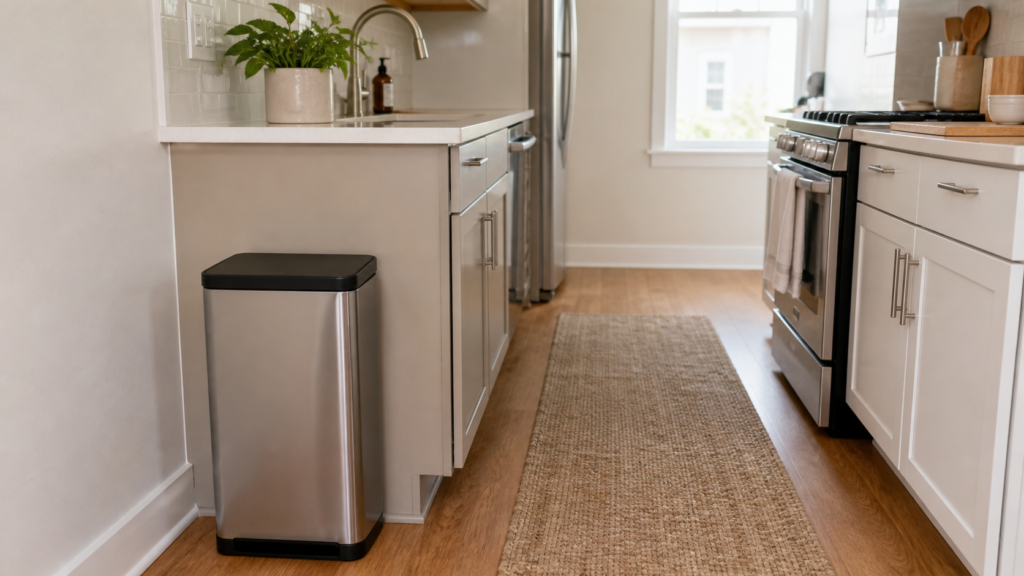
The best place for a trash can in a small kitchen is the closest usable spot to prep and cleanup that does not block a walkway, cabinet door, appliance door or bag change path. That sounds obvious, but it is the part most placement advice skips.
In a tight kitchen, a trash can is not just decor. It affects cooking flow, odor, pets, leaks, cleaning access and whether people actually use the bin instead of leaving scraps on the counter. Start with the space constraints, then choose the can style.
Best spot rule: in a small kitchen, put the trash can near the sink or main prep zone only if the lid opens fully, the bag can lift out cleanly and the can does not block the dishwasher, oven, refrigerator or main walkway. If that fails, use a removable under-sink bin or a nearby pantry-side spot instead.
Fast answer: the best place to put a trash can in a small kitchen is near prep or cleanup, but outside the walkway and away from appliance doors. Start with the end of a counter run, a sink-adjacent wall, a removable under-sink bin, or a pantry-side utility spot.
Before choosing the final location, open the dishwasher, oven, refrigerator and lower cabinets, then check that the lid opens fully and a full bag can lift out cleanly.
If no floor spot passes that test, compare under-sink vs slim step cans, check the small-kitchen trash can size guide, and then use the small-kitchen trash can options.
Quick Verdict
Put the trash can near the sink, prep area or cleanup zone if the lid can open fully and a person can still pass. Good first spots are the end of a counter run, a sink-adjacent wall, a removable under-sink bin or a pantry-side utility spot just outside the tightest part of the kitchen.
If the kitchen has no safe floor space, test an under-sink or cabinet-adjacent setup before installing hardware. If odor, pets or bag leaks are the reason you want to move the can, placement alone will not fix the root problem. You may need better food-waste habits, a cleaner liner routine, a lockable setup or a different bag fit.
The 60-Second Placement Check
Before deciding where the can belongs, open the doors and move through the kitchen like you are cooking. A spot that looks tidy while the kitchen is empty can become terrible when the dishwasher is open, the oven is hot or someone is carrying groceries through the room.
Use this quick check:
- Can a person walk past while the trash can is open?
- Does the lid hit a wall, counter edge, cabinet pull or appliance handle?
- Can the dishwasher, oven, refrigerator and lower cabinets still open?
- Can a full bag be lifted out without scraping the wall, cabinet frame or food-prep area?
- Is the can close enough to prep or cleanup that people will actually use it?
- Will pets, toddlers or heavy foot traffic make the location annoying?
- If the can is hidden, will leaks and odors be noticed quickly?
If the answer is no on movement, appliance access or bag removal, the spot is not good enough. In a small kitchen, daily friction matters more than whether the can looks hidden in a photo.
Small-Kitchen Placement Matrix
| Kitchen Situation | Best Starting Spot | Why It Works | Watch Out For |
|---|---|---|---|
| Narrow galley kitchen | End of a counter run or under-sink bin | Keeps the center walkway clearer. | Door swing and lid clearance can ruin the spot. |
| L-shaped kitchen | Inside corner edge, counter end or sink-adjacent wall | Keeps trash near prep without sitting in the main path. | Lower corner cabinets still need room to open. |
| Apartment kitchen | Slim step can, removable under-sink bin or utility-adjacent spot | Avoids drilling and stays flexible. | Do not assume mounted hardware is allowed by the lease. |
| No floor space | Under-sink, cabinet-door bin or small removable bin | Removes floor clutter. | Capacity and leak visibility are lower. |
| Dog or child access problem | Behind a latched cabinet, barrier or lockable can | Adds a concrete access control. | Hidden is not the same as secure. |
| Odor is the main concern | Easy-clean visible spot or small under-sink bin emptied often | Makes inspection and emptying easier. | Food waste and bag fit matter more than location alone. |
| Frequent cooking | Near prep or sink but outside the cooking path | Reduces messy trips across the kitchen. | Larger cans still need bag-change clearance. |
Best spot for a trash can in a small kitchen: place it close to prep and cleanup, but only if the lid opens fully, the bag lifts out cleanly and the can does not block the sink, dishwasher, oven, refrigerator or main walkway.
Good first spots are beside the sink base, at the end of a cabinet run, near a pantry wall, under the sink with a removable bin, or in a slim gap outside the busiest walkway. After choosing the spot, size the can with the Trash Can Size Selector and check liner fit with the Trash Bag Size Calculator.
Best Spots To Try First
The end of a counter run is often the easiest first test. It can keep the can near prep without placing it in front of an appliance. This works best when the can is narrow, the pedal has room to move and the bag can lift straight up.
A sink-adjacent wall can also work, especially if most waste comes from food prep, coffee, packaging or dish cleanup. The risk is crowding the dishwasher or lower sink cabinet. Open both before deciding the spot is usable.
Under the sink is worth testing when floor space is the real problem and the cabinet has clean clearance around plumbing. Use a loose removable bin first if possible. A pull-out or door-mounted setup can be useful, but it adds measurement risk and may not be renter-safe.
A pantry-side, utility-room or nearby hallway spot can work when the kitchen itself is too tight. The tradeoff is distance. If people have to carry wet scraps across the kitchen, they may leave messes behind or drip on the floor.
If the goal is hiding the can, compare the visual benefit against daily access. A hidden can that is hard to empty will usually become a dirtier setup over time. Do the basic placement check before treating hidden storage as the better answer.
Spots To Avoid In Small Kitchens
Avoid placing the can in front of the dishwasher, oven or refrigerator. Those doors open often, and a can in the way turns every cooking session into a small obstacle course.
Also avoid tight inside corners where the lid cannot open, the pedal hits the toe kick or a full bag has to scrape sideways before it comes out. That kind of friction is exactly how leaks, residue and torn bags become routine.
Be careful with heat-adjacent spots. A can beside an oven, radiator or sunny window can make food waste smell worse, especially if trash sits for more than a day. The location is not the only odor factor, but heat and trapped moisture do not help.
Hidden spots deserve extra caution. A cabinet or enclosed corner can make the kitchen look cleaner while letting liner leaks sit unnoticed. If you hide the can, build in a habit of checking the bottom, rim and surrounding cabinet floor.
Under-Sink Vs Slim Step Can
An under-sink trash can is best when the cabinet is actually usable, floor space is scarce and the household empties trash often enough that lower capacity is not a problem. It can be a strong small-kitchen solution, but only after measuring around pipes, disposal units, shelves, hinges and lid movement.
A slim step can is often better when you cook daily, rent, need faster bag changes or want easier cleaning access. A visible can is not automatically worse. In many kitchens, visible access makes leaks and residue easier to catch before they become odor problems.
Once you know the spot and clearance, compare product roles in best small kitchen trash cans instead of choosing only by gallon size.
Neither setup automatically blocks odors or pets. Under-sink placement can add a cabinet barrier, but it is not a lock. A slim step can may have a better lid, but food waste and bag fit still matter. Use under-sink trash can vs slim step can for the fuller comparison before treating either option as the default answer.
Odor, Leaks And Cleaning Access
If smell is the reason you are moving the trash can, pause before buying a new setup. Odor usually comes from food scraps, liquid in the liner, residue under the bag, a dirty lid or trash sitting too long. Moving the can may change how noticeable the smell is, but it will not remove the source.
A visible slim can is easier to inspect and clean. That helps when bag leaks, rim residue or wet food are common. The downside is that a loose lid or oversized can can let odor into the room if trash sits too long.
An under-sink can hides the bin and may encourage a smaller bag that gets emptied more often. The downside is slower leak detection. If liquid gets under the liner or onto the cabinet floor, the mess can sit there until the next bag change.
For odor basics, start with how to keep a trash can from smelling and how to clean a trash can. If the problem is recurring liner failure, keep the bag-leak support page in the local review queue before adding that link live.
Pets, Kids And Renter Constraints
A cabinet door can slow pets or kids, but it is not the same as a lock. Some dogs can nose open a cabinet, and a lightweight slim can can be tipped if the lid smells interesting enough. If access is the real issue, judge the setup by the control it adds: latch, lock, barrier, weight, lid design or room placement.
For pet problems, compare lockable and animal-resistant controls before assuming a hidden can is secure. If the household has a persistent dog-access issue, the future dog-owner buying page may be the better next click after visual review and product checks.
Renters should favor freestanding, removable or reversible setups unless cabinet modification is clearly allowed. A slim step can, loose under-sink bin or utility-adjacent can is usually safer than drilled pull-out hardware. If you do install anything, confirm that it can be removed without damage.
Next step by constraint: if the spot is too tight, size the can before buying; if the cabinet is the only open area, check under-sink clearance; if smell is the reason for moving the can, fix odor sources before hiding the bin.
- Use the Trash Can Size Selector for a room-and-capacity starting point.
- Measure under-sink trash can size before choosing a hidden bin.
- Compare odor-control kitchen trash cans only after the placement problem is clear.
Final Recommendation
Choose the closest usable spot to prep or cleanup that does not block movement, appliance access or bag removal. For many small kitchens, that means the end of a counter run, a sink-adjacent wall, a removable under-sink bin or a pantry-side utility spot.
If no floor spot works, test a removable under-sink or cabinet-adjacent setup before installing hardware. If the first location makes bag changes annoying, creates hidden leaks or blocks the dishwasher, it is the wrong spot even if it looks tidy.
If smell, leaks or pet access drove the search, solve those root causes before assuming a new location will fix the problem. Placement is part of the system. It is not a substitute for the right bag fit, regular cleaning, frequent emptying or a real access barrier.