
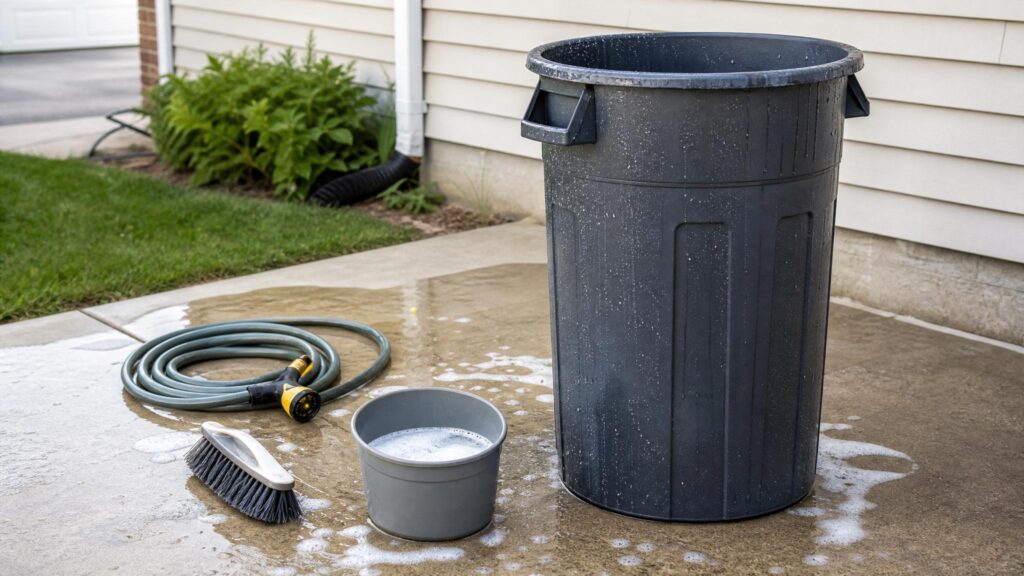
Knowing how to clean a trash can properly matters because odor usually does not come from the bag alone. It comes from leaked liquid, food residue, moisture, and grime that collects at the bottom, under the rim, and around the lid.
If odor comes back soon after cleaning, use the Trash Can Odor Diagnosis Checklist to separate lid residue, bag leaks, wet scraps and damp-can problems.
If cleaning helps only for a few days, the can design may be part of the problem. For kitchens with recurring food odor, compare odor-control kitchen trash cans.
The basic method is simple: empty the can, rinse it, scrub it with warm soapy water, treat odor spots with baking soda or vinegar, rinse again, and let it dry completely before adding a new bag. Drying is the step many people skip, and it is often the reason smells come back quickly.
| Cleaning job | Best simple fix |
|---|---|
| Normal kitchen trash can | Dish soap, warm water, brush, full drying |
| Strong odor after bag change | Baking soda paste or vinegar rinse |
| Sticky residue under the rim | Small brush or cloth with soapy water |
| Outdoor trash bin | Hose, long brush, soap, sun drying |
| Recurring moisture | Dry fully and use an absorbent liner |
What You Need to Clean a Trash Can
You do not need expensive products for routine trash can cleaning. Most bins can be cleaned with basic household supplies.
- Warm water
- Dish soap
- Long-handled scrub brush or sponge
- Baking soda
- White vinegar
- Old towel or paper towels
- Rubber gloves, especially for outdoor bins
If you are cleaning an outdoor bin, a garden hose makes the job easier. For a small indoor trash can, a bathtub, shower, utility sink, or outdoor area can work.
Step 1. Empty the Can Completely
Remove the bag and check the bottom of the can before adding water. If there are loose food scraps, broken bag pieces, paper, or dried residue, remove them first.
This is also a good time to check whether the trash bag has been leaking. If the bottom of the can is wet or sticky, the liner may be too thin, too small, or overfilled.
Step 2. Rinse the Inside and Outside
Rinse the inside of the trash can with warm water if possible. For outdoor bins, use a hose. For smaller kitchen or bathroom bins, rinse in a shower, tub, or utility sink.
Do not focus only on the bottom. Rinse the lid, rim, handles, foot pedal area, and outside walls. These areas often hold small amounts of residue that keep the can smelling even after the bag is gone.
Step 3. Scrub With Dish Soap and Warm Water
Add a few drops of dish soap and scrub the bottom, walls, lid, and rim. A long-handled brush helps with deep bins because it lets you reach the bottom without putting your arm inside the can.
Pay extra attention to these spots:
- The bottom corners
- The underside of the lid
- The rim where the bag folds over
- Pedals, hinges, handles, and sensor areas
If the can has a removable inner bucket, take it out and clean both pieces. Odor can sit between the liner bucket and the outer shell.
Step 4. Use Baking Soda for Stubborn Odor
If the trash can still smells after a normal scrub, baking soda can help neutralize odor. Sprinkle baking soda directly on damp odor spots, or mix it with a small amount of water to make a paste.
Spread the paste on the smelly area, let it sit for 10 to 15 minutes, then scrub and rinse. This works especially well on the bottom of kitchen trash cans where food liquid has dried.
For ongoing odor control after the can is clean, use the guide on DIY trash can deodorizer.
Step 5. Use Vinegar Carefully
White vinegar can help with odors, but it should not replace scrubbing. Use it after the soap wash, especially if the can smells sour or musty.
A simple option is to spray or wipe the inside with diluted white vinegar, let it sit for a few minutes, then rinse. Do not mix vinegar with bleach or strong chemical cleaners. If you use a disinfecting product, follow the label and rinse the can well before using it again.
Step 6. Rinse Again Until the Water Runs Clear
After scrubbing, rinse the can thoroughly. Soap residue can make the inside feel sticky, which attracts more grime later. Rinse the lid, rim, bottom, and outside surfaces until the water runs clear.
If you are cleaning an outdoor bin, tip it safely so the dirty water drains away from doors, walkways, and areas where people step.
Step 7. Dry the Trash Can Completely
This is the most important step if you want the trash can to stay fresh. A clean but damp can may start smelling again because moisture encourages odor-causing buildup.
- Wipe the inside with an old towel.
- Leave the lid open while it dries.
- Let the can sit in sunlight if possible.
- Do not add a new bag until the bottom is fully dry.
If your main problem is smell, the drying step pairs well with the tips in how to keep a trash can from smelling.
How Often Should You Clean a Trash Can?
For a kitchen trash can, a monthly deep clean is a good baseline. Wipe the lid and rim weekly if you throw away food scraps often. Clean the can immediately if a bag leaks, something spills inside, or the smell remains after changing the bag.
Outdoor bins may need cleaning every one to two months in warm weather, especially if they hold food waste. During hot months, odors build faster, so the routine in summer trash can smells can help.
How to Keep the Can Clean Longer
- Use trash bags that fit the can properly.
- Do not overfill the bag.
- Wrap wet food scraps before throwing them away.
- Check the bottom after removing heavy bags.
- Keep the lid and rim wiped down.
- Let the can dry before inserting a new liner.
Small habits matter more than strong fragrances. A clean, dry trash can should smell like nothing, not like perfume covering garbage.
Cleaning Plastic vs Stainless Steel Trash Cans
The basic cleaning process is the same, but the surface changes the details. Plastic trash cans can usually handle more scrubbing, while stainless steel cans need gentler wiping on the outside to avoid scratches, streaks, and water spots.
| Material | Best cleaning approach | Watch out for |
|---|---|---|
| Plastic | Soap, warm water, brush, baking soda for odor spots | Scratches, stains, odor in textured areas |
| Stainless steel | Microfiber cloth, mild soap, wipe with the grain, dry immediately | Fingerprints, water spots, abrasive pads |
| Inner bucket | Remove, wash, rinse, and dry fully | Putting it back damp |
| Motion sensor lid | Wipe carefully with a barely damp cloth | Sprays, soaking, water near electronics |
If you are cleaning a motion sensor model, treat the electronic lid separately from the bucket. The bucket can usually be washed like a normal trash can, but the lid should be wiped carefully. For that specific process, use a dedicated motion sensor lid cleaning process.
Common Cleaning Mistakes
- Only cleaning the bottom: the rim and lid often hold just as much odor.
- Adding a new bag too soon: trapped moisture can restart the smell.
- Using strong fragrance instead of cleaning: scent can mix with garbage odor.
- Forgetting the bag size: poor-fitting bags leak and undo the cleaning.
- Scrubbing stainless with abrasive pads: this can leave visible scratches.
When to Replace Instead of Clean
Most trash cans can be cleaned, but replacement makes sense if plastic is cracked, the lid no longer closes, the pedal is broken, or odor remains after repeated proper washing and drying. A damaged can is harder to keep sanitary because residue hides in cracks and loose parts.
Frequently Asked Questions
What is the best thing to clean a trash can with?
For routine cleaning, warm water, dish soap, and a scrub brush are enough. Baking soda helps with odor spots, and diluted white vinegar can help after scrubbing if the can still smells.
Can you use bleach to clean a trash can?
You can use a disinfecting product if the label says it is safe for the surface, but do not mix bleach with vinegar or other cleaners. For most household trash cans, soap, scrubbing, rinsing, and complete drying solve the main odor problem.
Why does my trash can still smell after washing it?
The can may still be damp, or residue may be stuck under the rim, on the lid, around hinges, or in the bottom corners. Wash those areas again and let the can dry fully before adding a new bag.
Should you clean the lid too?
Yes. The lid often holds odor because food residue, moisture, and bag contact happen near the top of the can. Clean the underside of the lid, the rim, handles, and any pedal or sensor area.
How do you clean an outdoor trash bin?
Empty it, rinse it with a hose, scrub with dish soap and a long-handled brush, treat odor spots with baking soda, rinse again, and leave it open to dry in the sun if possible.
Can you put a trash can back in use while damp?
It is better to wait until it is fully dry. A damp trash can can trap moisture under the liner and make odor return quickly, especially in warm kitchens.