
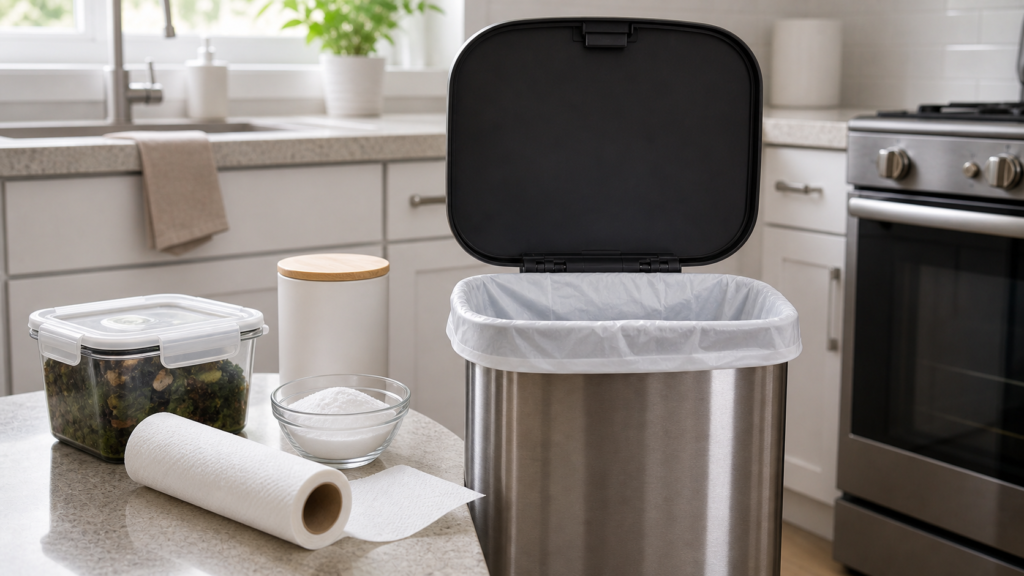
If your trash can smells even with a bag, the bag is probably not doing what you think it is doing. A kitchen trash bag helps keep waste from touching the can, but it is not an airtight odor barrier. Smell can still escape through the open top, around the rim, from wet food waste, from a small liner leak or from residue already stuck to the lid and inner bucket.
The useful question is not “What product blocks all trash odor?” The better question is “Where is the smell starting?” Once you know whether the problem is food waste, bag fit, old residue, absorbed odor or a nearby kitchen source, the fix becomes much clearer.
Quick Verdict
A trash bag reduces mess, but it does not seal odor by itself. The most common reasons a trash can still smells with a bag are wet food scraps, a tiny leak under the liner, trash touching the rim or lid, odor absorbed into plastic, poor bag fit and smells coming from nearby drains, recycling or damp items.
A scented bag, deodorizer or new can may help in some cases, but only after the source of the smell is identified. If the same wet waste, leak or dirty lid remains, the next liner or can can start smelling quickly too.
Start with diagnosis before shopping. If the main issue is general trash odor, use how to keep a trash can from smelling. If the can itself needs cleanup, use how to clean a trash can before adding any deodorizing step.
The 60-Second Odor Diagnosis
Before you change bags or buy anything, inspect the can while the problem is still fresh. You are looking for the first source of odor, not just the strongest place it ends up.
- Does the odor appear only when the lid opens, or even when the can is closed?
- Is the bag wet, torn, stretched tight, slipping below the rim or hanging above the bottom?
- Is there liquid at the bottom of the can or under an inner bucket?
- Does the can still smell after the bag is removed?
- Is there residue on the rim, lid underside, hinge, pedal area or liner ring?
- Is the can plastic, stainless steel with a plastic insert or hidden inside a cabinet?
- Could the odor be coming from recycling, a sink drain, disposal, compost bin, pet food or damp cleaning cloth?
If the smell is strongest only when the lid opens, food waste and lid fit are likely suspects. If the empty can still smells, residue or absorbed odor is more likely. If the smell is strongest near the sink or inside a cabinet, confirm that the trash can is really the source before treating it like a trash product problem.
Root-Cause Table
| Symptom | Most Likely Cause | First Fix | When To Consider A Product Change |
|---|---|---|---|
| Smell gets worse when the lid opens | Food waste odor collecting inside the can | Empty food-heavy trash sooner and seal very wet scraps before disposal. | If a better-fitting lid or smaller food-waste routine still makes sense. |
| Can smells after the bag is removed | Residue, a liner leak or odor absorbed into the can | Clean the can, lid, rim and inner bucket, then let everything dry fully. | If plastic odor remains after repeated proper cleaning. |
| Bottom of the can smells sour | Small bag leak or liquid pooling under the liner | Fix wet-waste handling and bag fit. | If seams fail during normal kitchen use. |
| Rim or lid smells | Trash touched the can outside the bag | Wipe the rim, lid underside, hinge and pedal area. | If the lid design traps residue and is hard to clean. |
| Smell appears near the sink or cabinet | Nearby non-trash source | Check the drain, disposal, recycling, damp cloths and cabinet floor. | Do not buy a trash product until the source is confirmed. |
| Scented bags make the smell worse | Fragrance mixing with food odor | Try unscented bags and fix the waste source. | If odor-control liners have credible material features, not just fragrance. |
Why A Bag Does Not Stop Every Odor
Most kitchen trash bags are liners. They are meant to hold trash and protect the can from direct mess. They are not sealed containers. Odor can escape whenever the lid opens, around the drawstring area, through a loose rim fit or from food waste sitting near the top of the bag.
A bag can also keep solids away from the can while still letting liquid create a smell problem. If wet scraps, takeout containers or food packaging leak down the side of the liner, residue can sit between the bag and the can. The bag may look normal from above while the bottom of the can smells sour.
Bag fit matters too. If the liner is stretched tightly over the rim, hanging above the bottom or slipping below the edge, it can leave more of the can exposed. If leaks are part of the smell, how to stop trash bag leaks is the better next diagnosis.
Check Wet Food Waste Before Changing Products
Wet food waste is one of the fastest ways to make a lined trash can smell. Coffee grounds, meat packaging, seafood packaging, spoiled produce, melon rinds, onion scraps and saucy takeout containers can create odor quickly, especially in warm kitchens.
Drain liquids before tossing packaging. Wrap or tie very wet scraps before they enter the main kitchen trash. If a bag becomes food-heavy, take it out sooner instead of waiting for the can to look full. A half-full bag of wet scraps can smell worse than a full bag of dry packaging.
If food scraps are the recurring source, a smaller can emptied more often may work better than a larger can that holds waste longer. That is not a product rule for every household. It is a habit-and-capacity tradeoff: less time in the can usually means less odor buildup.
Inspect The Rim, Lid And Inner Bucket
A clean-looking bag does not mean the can is clean. Odor can cling to the lid underside, hinge, pedal zone, liner rim, inner bucket handle, removable bucket and bottom seam. These areas get missed because they are not always visible when the bag is installed.
If the can smells after the bag is removed, inspect the can before adding a deodorizer. Look under the lid, around the rim and near any parts that move. A small smear of food residue near the hinge can smell stronger than the bottom of the bag because warm air passes it every time the lid opens.
After cleaning, let the can dry fully before adding a new liner. Trapped moisture can make odor return quickly and can make the next bag seem like the problem even when the real issue is a damp can.
Plastic, Stainless Steel And Hidden Cans
Material can influence odor, but it does not solve odor by itself. Plastic can hold smells more stubbornly when it is scratched or repeatedly exposed to food leaks. Stainless steel exteriors are easier to wipe, but many stainless cans still use plastic inner buckets, liner rings, lids or seals that need cleaning.
Hidden cans have their own tradeoff. An under-sink or cabinet trash setup can make a kitchen look cleaner, but it can also hide small leaks until the smell is stronger. If a cabinet floor or pull-out tray smells, inspect the area around the can as well as the can itself.
If material, lid design or easy cleaning becomes the main issue after diagnosis, compare options with best trash cans for kitchen odor control. Treat that as a buying decision after the root cause is clear, not as the first step.
When A Deodorizer Helps
A deodorizer can help with mild lingering smell after the can is clean and dry. It is not a substitute for removing old food residue, fixing bag leaks or cleaning a dirty lid. If there is active liquid, a deodorizer only makes the can smell like trash plus fragrance.
Baking soda, charcoal-style filters and commercial trash can deodorizers are different tools. Some are better for mild background odor, some are easier to replace and some depend on the can having a filter compartment. Avoid treating any of them as a permanent fix for food waste, moisture or poor cleaning.
For a low-risk add-on after cleanup, see DIY trash can deodorizer. Add it only after the can is dry and the odor source has been handled.
When To Replace The Can
Replacing the can is reasonable when the can still smells after repeated cleaning and full drying, when plastic is scratched or cracked, when the lid and rim trap residue in areas you cannot clean well, or when the current size encourages food waste to sit too long.
It can also make sense if bag fit is consistently poor, the inner bucket hides leaks, pets are getting access or the lid does not close well enough for normal kitchen use. Even then, do not assume the new can fixes everything. A new can will smell too if wet scraps, leaks and dirty lid areas keep repeating.
Use replacement as the last step in the diagnosis, not the first. First check food waste, bag fit, residue, nearby odor sources and cleaning. Then decide whether the can is part of the problem.
Final Recommendation
If the smell disappears when the bag is removed, focus on food waste, bag fit and emptying frequency. If the empty can still smells, clean the lid, rim, inner bucket and bottom seam before adding any deodorizer. If the smell is strongest near the sink, cabinet or recycling, confirm the source before blaming the trash can.
The best fix is the one that matches the cause: less wet waste, better liner fit, a cleaner lid, a dry can, a checked nearby source or a replacement can only when the existing can keeps trapping odor after proper cleaning.