
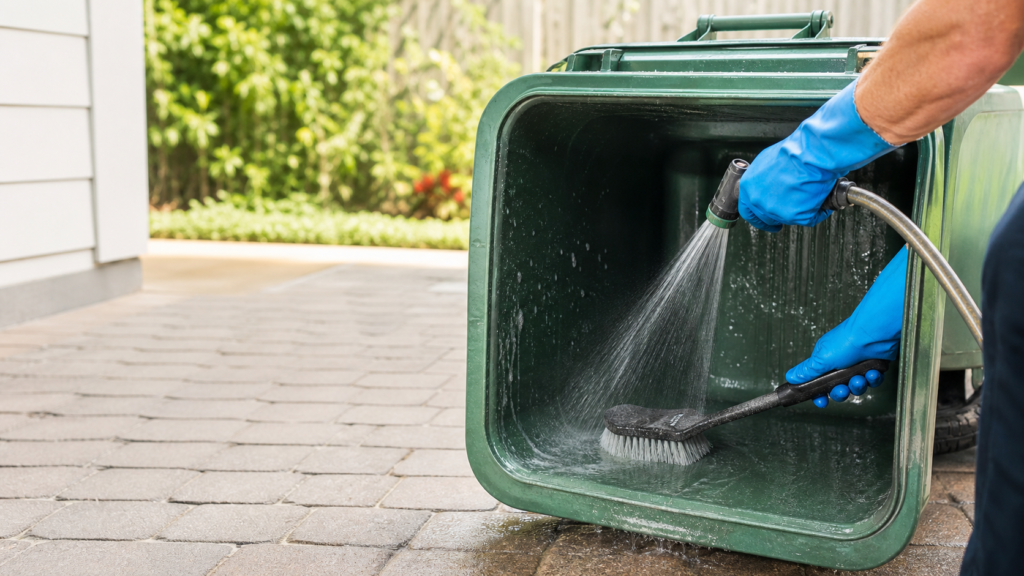
If you opened your trash can and found maggots, the first goal is simple: remove the trash, kill or remove the larvae safely, clean the can, and make the bin less attractive to flies afterward.
Maggots are fly larvae. They usually appear when flies can reach damp food waste, leaking bags, meat scraps, pet waste, or other organic material inside the trash can. The problem is gross, but the fix is usually straightforward if you deal with the moisture and food residue, not just the visible larvae.
| Situation | Best first move | Why it helps |
|---|---|---|
| Outdoor trash can with visible maggots | Wait until the can is empty if possible, then treat and rinse outside | Less mess and easier cleanup |
| Indoor kitchen trash can | Remove the bag, seal it, take it outside, then clean the can | Stops larvae and odor spreading indoors |
| You want the fastest non-chemical method | Carefully use very hot water if the bin material can handle it | Heat kills larvae quickly |
| You want a gentler odor-control method | Use hot water with vinegar, then scrub and dry | Helps with larvae, residue, and smell |
| The can keeps getting maggots | Fix leaking bags, food scraps, moisture, and lid gaps | Prevention matters more than repeated cleaning |
Step 1. Remove the Trash and Seal It
Put on gloves before touching the bin. If the trash bag is still inside, close it tightly, double-bag it if needed, and move it outside. If the bag has leaked, avoid dragging liquid through the house.
For an outdoor cart, the cleanest time to deal with maggots is right after pickup, when the bin is empty. If you cannot wait, remove loose trash carefully and keep the lid closed until you are ready to clean.
Step 2. Choose a Maggot-Killing Method
Several common methods can work. The best choice depends on whether the bin is indoors or outdoors, what it is made from, and how much mess you are dealing with.
Option A: Very Hot Water
Very hot water can kill visible maggots quickly. This works best for outdoor bins where you can pour, rinse, and drain safely.
- Use caution to avoid burns.
- Do not use boiling water on a surface or bin that may warp, crack, or splash back.
- After the water cools, dispose of the dead larvae and clean the bin fully.
Option B: Hot Water and Vinegar
Hot water with white vinegar is useful when the trash can also smells sour or rotten. It is not a substitute for scrubbing, but it can help loosen residue and reduce odor.
Pour the mixture into the affected area, let it sit briefly, then scrub, rinse, and dry the can. Do not mix vinegar with bleach or other strong chemical cleaners.
Option C: Salt for Moisture and Larvae
Salt can help dry out maggots and reduce the damp conditions they need. It is slower than hot water, but it can be useful after cleaning or when the bottom of the can stays wet.
Sprinkle salt over the affected area, wait, then sweep or rinse out the residue before washing the can. Salt is not magic; it works best when you also remove the food waste and moisture that attracted flies.
Option D: Disinfectant or Bleach-Based Cleaner
A disinfecting product can be useful after the larvae are removed, especially if the can held leaking food waste. Follow the product label, use it in a ventilated area, and keep children and pets away while cleaning.
Never mix bleach with vinegar, ammonia, or other cleaners. For many household trash cans, soap, scrubbing, rinsing, and complete drying are enough after the visible infestation is removed.
Step 3. Scrub the Trash Can Afterward
Killing the maggots is only half the job. If food residue, leaked liquid, or odor remains, flies may come back and lay eggs again.
- Rinse the can to remove dead larvae and loose residue.
- Scrub the bottom, corners, walls, rim, lid, and handles with dish soap and warm water.
- Use a long-handled brush for deep outdoor bins.
- Rinse until the water runs clear.
- Dry the can completely before adding a new bag.
For a full cleaning routine, use the step-by-step guide on how to clean a trash can.
What Not to Do
When you see maggots, it is tempting to throw every strong cleaner at the problem. That can make the cleanup more dangerous than it needs to be.
- Do not mix bleach with vinegar, ammonia, or other cleaners.
- Do not carry a leaking bag through the house without sealing it first.
- Do not pour very hot water where it can splash back onto your legs or feet.
- Do not put a new bag into a damp can and call the job finished.
- Do not rely on fragrance alone. Scent may hide odor for a while, but it does not remove the residue that attracted flies.
Why Maggots Appear in Trash Cans
Maggots do not appear because the trash can is cursed, although it may feel like it at the moment. They appear because flies found a place to lay eggs.
The most common causes are:
- Food scraps sitting too long in warm weather
- Leaking trash bags
- Meat, fish, dairy, or pet waste in the bin
- A lid that does not close tightly
- Loose trash instead of sealed bags
- A damp can that never fully dries
If trash bags often leak inside the can, fix that problem first. The guide on how to stop trash bag leaks can help you reduce the wet residue that attracts flies.
After the active mess is gone, switch from removal to prevention. Use how to keep maggots out of a trash can to tighten the lid, moisture, food-scrap and cleaning routine that stops the same problem from coming back.
How to Prevent Maggots From Coming Back
The best prevention is boring but effective: keep food waste sealed, keep the can dry, and reduce access for flies.
- Take out food-heavy trash before it sits through hot weather.
- Tie bags tightly before putting them in an outdoor bin.
- Use stronger bags if the current ones leak.
- Keep the lid closed whenever possible.
- Clean spills as soon as a bag leaks.
- Let the can dry fully after cleaning.
- Store outdoor bins away from direct heat when practical.
If odor is the recurring trigger, read how to keep a trash can from smelling. In hot weather, the prevention routine in summer trash can smells is especially relevant.
Quick Prevention Checklist
| Check | Pass/fail question |
|---|---|
| Bag fit | Does the bag stay in place without sliding, stretching, or tearing? |
| Food waste | Is wet food sealed or removed before it sits in heat? |
| Lid | Does the lid close fully after each use? |
| Moisture | Is the bottom of the can dry before a new bag goes in? |
| Outdoor bin | Are bags tied before they go into the cart? |
Indoor vs Outdoor Trash Can Maggots
| Type of can | Main risk | Best prevention |
|---|---|---|
| Kitchen trash can | Food scraps, leaking bags, warm indoor air | Remove food waste quickly and wipe leaks |
| Bathroom trash can | Small bags left too long | Use a lid and empty regularly |
| Outdoor cart | Heat, loose bags, lid gaps, food residue | Tie bags, rinse after leaks, keep lid closed |
| Garage bin | Warm enclosed space and food odor | Clean spills fast and improve airflow if possible |
When Should You Replace the Trash Can?
Most maggot problems do not require a new trash can. Replace the can only if it has cracks, a broken lid, a damaged pedal, deep scratches that hold grime, or an odor that remains after repeated proper cleaning and full drying.
A lid that will not close is especially important. If flies can reach the contents easily, the same problem can return even after a thorough cleaning.
Frequently Asked Questions
What kills maggots in a trash can fast?
Very hot water can kill visible maggots quickly, especially in an outdoor bin, but use caution to avoid burns and avoid using it on surfaces that may warp or splash. Hot water with vinegar, salt, and disinfecting products can also help depending on the situation.
Can I use bleach for maggots in a trash can?
You can use a bleach-based or disinfecting product if the label allows it for the surface, but follow the instructions carefully and never mix bleach with vinegar, ammonia, or other cleaners. Ventilate the area and keep pets and children away while cleaning.
Why do maggots keep coming back in my trash can?
They usually come back because flies can still access damp food waste, leaking bags, loose trash, or a dirty lid/rim. Fix moisture, seal food waste, close the lid, and clean the can after leaks.
Are maggots in a trash can a sign the whole house is dirty?
No. Maggots can appear quickly when flies reach warm, damp organic waste. The important thing is to remove the waste, clean the can, and prevent flies from reaching similar material again.
Should I clean the trash can after the maggots are gone?
Yes. If you only kill the visible larvae but leave food residue, odor, or moisture behind, flies may return. Scrub the can with soap and water, rinse it well, and let it dry fully.