
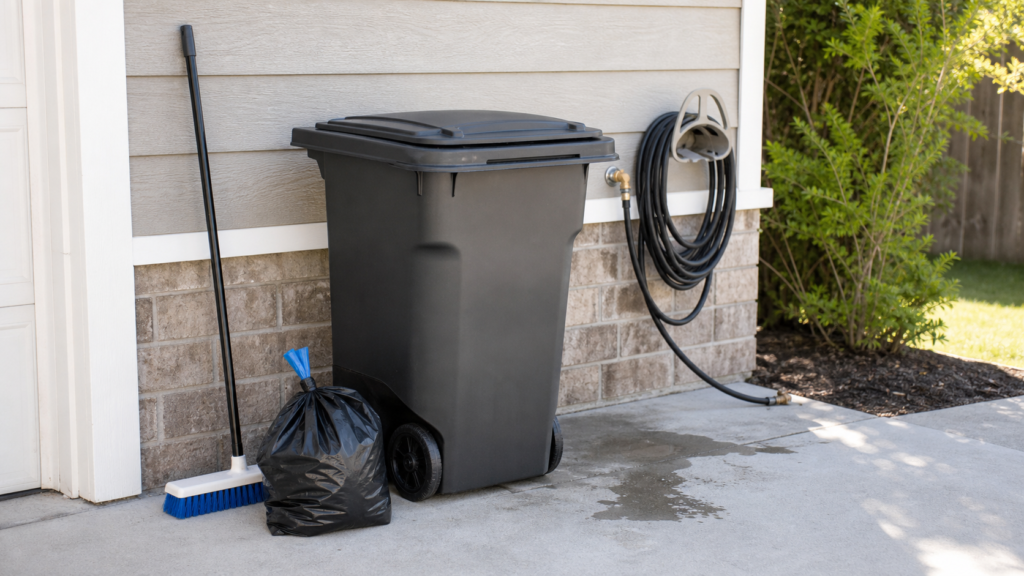
To keep maggots out of a trash can, stop flies from reaching damp food waste. That means sealing bags, removing wet scraps faster, fixing leaks, keeping the lid closed, cleaning residue after spills, and letting the can dry before you add a new liner.
Safety note: use household cleaners only as labeled, work with ventilation, keep children and pets away while cleaning, and never mix bleach with vinegar, ammonia or other cleaners. For pet ingestion, large-wildlife rules, illness, heavy infestations or anything beyond routine household cleanup, use a veterinarian, official local guidance or a qualified professional.
Maggots are fly larvae. They do not start in the plastic can itself; they appear when flies can lay eggs on food scraps, leaked liquid, pet waste, meat, fish, dairy or other organic material. If the same conditions stay in place, the problem can come back even after a deep clean.
| Cause | What to change | Why it works |
|---|---|---|
| Wet food scraps | Seal or remove food-heavy trash sooner | Removes the breeding material flies want |
| Leaking bags | Use better-fitting bags and stop overfilling | Keeps liquid out of the bottom of the can |
| Loose outdoor trash | Tie kitchen bags before they go into the cart | Reduces fly access inside the outdoor bin |
| Open or broken lid | Keep the lid closed or replace a damaged lid | Blocks the easiest fly entry point |
| Residue on rim or lid | Wipe the rim, handles and lid underside after leaks | Removes hidden food odor and egg-laying spots |
| Damp can after cleaning | Let the can dry fully before relining | Reduces the moisture that keeps the cycle going |
Start With the Fly Problem, Not the Maggot Problem
Prevention works best when you think one step earlier. If maggots appear, flies already found the trash. The goal is to make the can less attractive and harder to access before eggs are laid.
The biggest triggers are warm weather, wet food waste, a lid that does not close, bags that slip down, and residue left after an old leak. A scented product may hide odor for a while, but it will not fix open access, moisture or food residue.
Daily Habits That Prevent Maggots
Most prevention comes from small habits, not aggressive chemicals. Use this as the default routine for kitchen and outdoor trash cans.
- Scrape wet food into a sealed bag before it goes into the trash.
- Take out meat, fish, dairy and pet-waste trash before it sits in heat.
- Tie the kitchen trash bag before putting it in the outdoor cart.
- Keep the trash can lid closed after each use.
- Wipe spills on the rim, pedal area, lid underside and handles.
- Do not put loose food directly into an outdoor garbage cart.
- Use a bag that fits the can instead of one that slides, stretches or tears.
If the bag keeps slipping or leaking, fix that first. The guide on how to stop trash bag leaks explains the bag-fit problems that leave wet residue in the bottom of the can.
What to Do on Trash Day
Trash day is the best time to break the repeat cycle because the outdoor bin is empty. You do not need a full deep clean every week, but you should check for the conditions that bring flies back.
- Look at the bottom of the outdoor cart after pickup.
- If there is liquid, food residue or torn bag material, rinse it out where runoff is allowed.
- Scrub sticky spots with dish soap and warm water.
- Wipe the rim and lid underside, not just the bottom.
- Leave the lid open only long enough for the bin to dry, then close it again.
For a full wash routine, use the step-by-step guide on how to clean a trash can. The important part for maggot prevention is not making the can smell nice for an hour. It is removing the food film and moisture that attract flies.
Hot Weather Prevention
Warm weeks need stricter habits because food waste breaks down faster and odor travels more easily. If maggots only show up in summer, your normal routine may be fine in cooler months but too slow during heat.
| Hot-weather issue | Better habit | Priority |
|---|---|---|
| Meat or fish scraps | Seal separately and take out the bag sooner | High |
| Outdoor cart in full sun | Move it to shade if practical and allowed | Medium |
| Bag sits several days | Use smaller bags so food waste leaves the kitchen sooner | High |
| Bin smells after pickup | Rinse and dry the empty cart before adding new trash | High |
| Lid left open | Close it every time, even if the cart smells bad | High |
If odor spikes every summer, use the dedicated guide on summer trash can smells. Odor control and maggot prevention overlap because both start with wet organic waste sitting too long.
Kitchen Can Prevention
In a kitchen trash can, the weak points are usually bag fit, food scraps and lid behavior. A loose bag can slide down the side and leave food directly against the can. A bag that is too small may stretch and tear. A lid that stays open makes it easy for flies to reach the waste.
Use a liner that reaches over the rim without extreme stretching. Do not pack wet scraps into a bag that is already heavy. If the bottom of the can is damp when you remove the bag, clean and dry it before putting in a new one.
Outdoor Cart Prevention
Outdoor carts are more exposed to heat, flies and loose bags. The most important rule is simple: tied bags only. Loose food waste in an outdoor cart gives flies direct access and makes the next pickup cycle worse.
Check the lid too. If the lid is cracked, warped or blocked by overfilled trash, flies can enter even when you think the cart is closed. If a bag bursts in the cart, treat that as a cleanup event, not just an annoyance.
What Not to Rely On
Some products can help with odor, but they do not replace access control and cleaning.
- Do not rely on fragrance alone. It can hide odor without removing residue.
- Do not keep adding disinfectant to a dirty can instead of washing it.
- Do not use pesticides inside the bin as a routine habit unless the product label allows that use and the problem truly requires it.
- Do not mix bleach with vinegar, ammonia or other cleaners.
- Do not leave the can damp after cleaning. Drying is part of prevention.
If the can still smells after normal cleaning, read how to keep a trash can from smelling. Persistent smell usually means residue, trapped liquid, lid grime or a bag-fit problem is still present.
If Maggots Are Already There
If you already see maggots, prevention can wait until the active mess is handled. Remove or seal the trash, kill or remove the larvae safely, scrub the can, rinse it and dry it before relining.
Use the emergency cleanup guide on how to get rid of maggots in a trash can. After the can is clean, come back to the prevention checklist and fix the cause that let flies in.
Quick Prevention Checklist
| Check | Pass/fail question |
|---|---|
| Bag fit | Does the bag stay over the rim without sliding or tearing? |
| Wet waste | Are meat, fish, dairy and pet-waste scraps removed quickly in heat? |
| Outdoor cart | Are all bags tied before they go into the cart? |
| Lid | Does the lid close fully after each use? |
| Residue | Is the rim, lid underside and bottom clean after leaks? |
| Drying | Is the can dry before a new liner goes in? |
Frequently Asked Questions
How do I stop maggots from coming back in my trash can?
Remove the conditions that attract flies: damp food waste, leaking bags, loose outdoor trash, an open lid and residue inside the can. Tie bags, remove wet scraps faster, clean after leaks and let the can dry before relining.
Why do I keep getting maggots in my outdoor garbage can?
The usual causes are loose food waste, torn bags, heat, a lid that does not close, and old liquid or food residue in the bottom of the cart. Outdoor carts need tied bags and a quick rinse after leaks.
Will bleach prevent maggots in a trash can?
Bleach or a disinfecting product may help after cleaning if the label allows it for the surface, but it will not prevent maggots if flies can still reach wet food waste. Never mix bleach with vinegar, ammonia or other cleaners.
Does vinegar keep maggots away from trash cans?
Vinegar can help with cleaning and odor, but it is not a complete prevention system. Bag sealing, lid closure, residue removal and drying matter more than any single smell-based method.
Should I replace a trash can that keeps getting maggots?
Replace it only if the lid is broken, the plastic is cracked, the pedal no longer closes the lid, or deep scratches hold grime after proper cleaning. Most repeat problems come from waste handling and leaks rather than the can itself.